Introduction
The use of consumer and commercial drones to smuggle contraband into correctional facilities has become a critical security crisis for prisons worldwide. Cellphones, drugs, weapons, and other illicit items are routinely air-dropped over prison walls, bypassing traditional ground-based security measures. A prison drone net offers a physical, tamper-proof barrier that intercepts these unauthorized aerial deliveries at the source. Unlike detection-only systems that merely alert staff to a drone presence, a physical net barrier captures or deflects drones before they can drop their payload. This makes anti-contraband netting systems for prisons and jails the most effective defense against aerial smuggling. This article explores how these systems work, their advantages over electronic countermeasures, installation considerations, costs, regulatory compliance, and why aerial containment netting is becoming the gold standard for correctional facility airspace security.
What Is a Prison Drone Net?
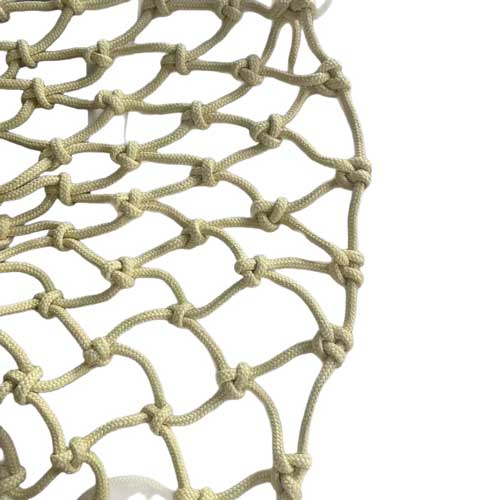
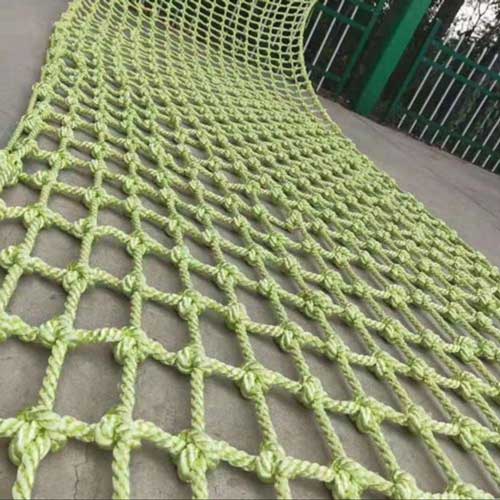
A prison drone net — sometimes called an anti drone net for prison facilities — is a physical aerial barrier system specifically engineered to prevent unmanned aircraft from entering or dropping payloads into correctional facility airspace. These systems consist of high-tensile strength netting — often woven from ultra-high-molecular-weight polyethylene (UHMWPE), aramid fibers, or stainless steel cable — suspended above open areas such as recreation yards, exercise tracks, and delivery zones. This technology is designed specifically for contraband smuggling prevention, effectively blocking the most common drone delivery routes used by criminal networks outside prison walls.
How Prison Drone Nets Work for Contraband Prevention
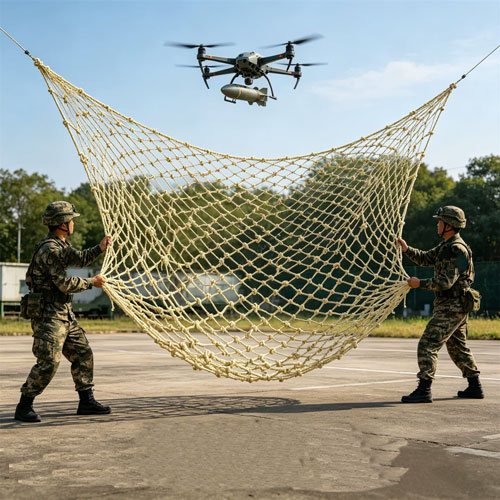
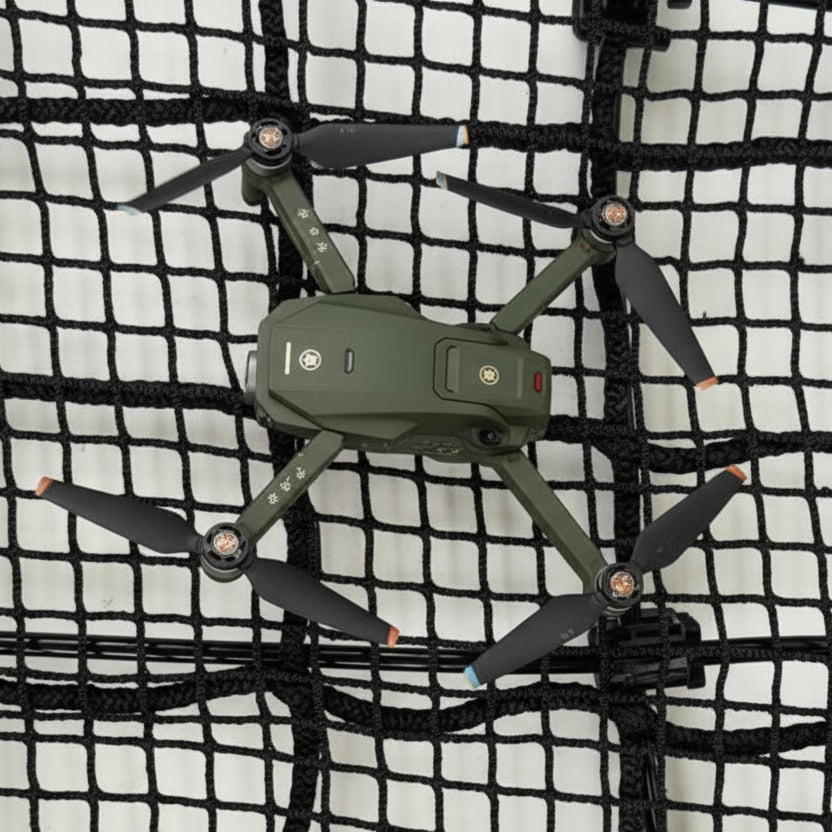
These systems serve as a dedicated barrier for contraband smuggling prevention, intercepting deliveries through a straightforward mechanical process. When a drone attempts to fly over a protected area, its rotors become entangled in the netting mesh, causing an immediate loss of lift and control. The drone and any attached payload are either caught in the net or deflected to the ground within the secured perimeter. This physical interception approach offers several advantages over purely electronic counter-drone solutions:
- Immediate physical capture — The drone is stopped mid-flight, not merely detected or redirected
- Evidence preservation — The entangled drone and contraband remain on-site for law enforcement investigation
- Zero electronic interference — No radio frequency jamming or GPS spoofing that could affect nearby communications or aviation
- 24/7 autonomous operation — The net works continuously without operator intervention, unlike detection systems requiring human response
- Tamper-proof barrier — Drones cannot cut through industrial-grade netting with standard consumer-grade equipment
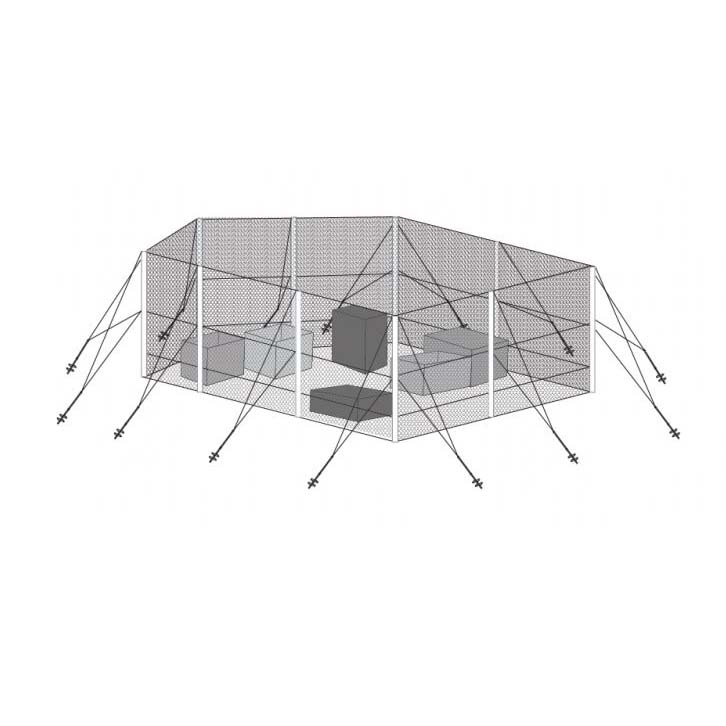
For maximum security facilities, these anti-contraband netting systems are typically tensioned across steel cable support structures anchored to perimeter walls or freestanding poles, creating an invisible aerial fence that eliminates the primary smuggling vector drones represent. The prison anti-drone net system for maximum security facilities often incorporates additional reinforcement layers for high-risk zones.
Prison Drone Net vs Detection-Only Systems: Which Provides Better Security?
When evaluating security options for correctional facilities, administrators must weigh the effectiveness of aerial net barriers against detection-only electronic systems. Here is a direct comparison of the two approaches:
| Factor | Physical Net Barrier | Detection-Only System |
|---|---|---|
| Interception method | Physical capture/entanglement | Radar/RF detection, alert only |
| Contraband stop rate | ~95-100% if drone crosses barrier | 0% (relies on human response) |
| Response time needed | None — automatic interception | Immediate human action required |
| False alarm rate | Zero (no alerts to generate) | Moderate to high (birds, weather) |
| Electronic interference | None | Possible with jamming add-ons |
| Regulatory hurdles | Minimal (passive physical barrier) | Significant (FAA, Ofcom, frequency licenses) |
| Operational cost | Low — no ongoing monitoring needed | Moderate — staffing and maintenance |
While detection-only systems serve an important alerting function, they fail to physically prevent contraband from entering the facility. The critical gap is response time: by the time security personnel receive a drone alert, assess the situation, and respond, a drone can drop its payload and depart in under 30 seconds. A physical net barrier eliminates this weakness by stopping the drone immediately. Many facilities now employ a layered approach — using detection radar for wide-area awareness combined with aerial net coverage over critical zones for guaranteed interception.
Best Drone Net Types for Correctional Facility Security
Different correctional facilities have different security needs, and selecting the right aerial security netting design depends on factors like facility classification, layout, climate, and contraband smuggling risk level. Below are the most effective solutions available.
CUVAS Nets for Prisons and Drone Contraband Control
Counter-Unmanned Aerial Vehicle Aerial Security (CUVAS) nets are specifically engineered for prison contraband control. These systems use ultra-fine mesh polyethylene netting with tensile strength exceeding 500 kg per square meter, capable of stopping drones weighing up to 25 kg traveling at speeds of 30 m/s. CUVAS nets are designed to be nearly invisible from a distance, maintaining the aesthetic and operational integrity of the facility while providing robust aerial denial.
Maximum-Security Anti-Drone Solutions for Prisons
For maximum security facilities housing high-risk inmates, reinforced barrier systems are recommended. These typically incorporate:
- Aramid fiber netting — Cut-resistant and flame-retardant, ideal for facilities where inmates might attempt to damage the net
- Stainless steel cable mesh — Virtually indestructible, suitable for perimeter fence topping and high-value zones
- Multi-layer net arrays — Overlapping net layers at different tension levels to catch drones at various approach angles
- Integrated sensor nets — Netting with embedded fiber-optic sensors that detect net penetration and immediately alert control rooms
Specialized Configurations for Different Prison Areas
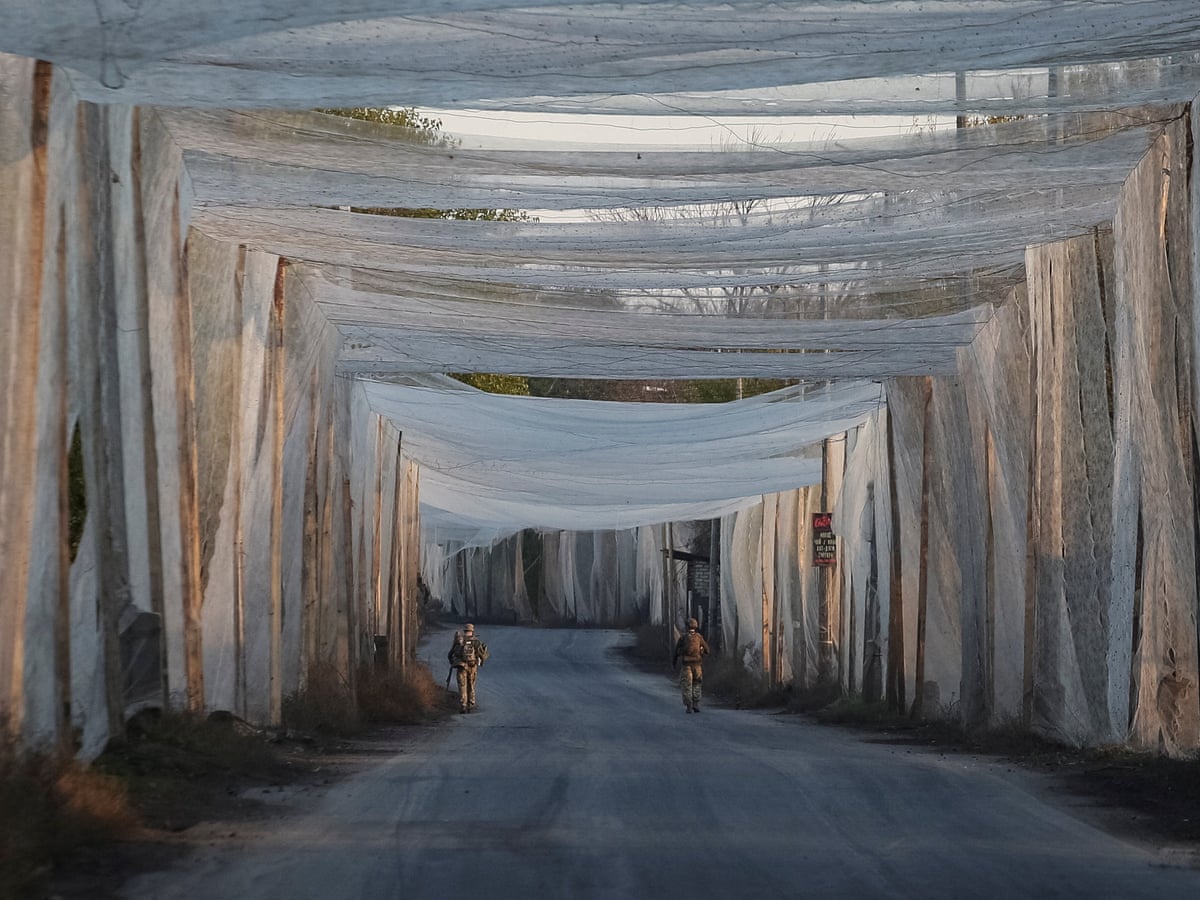
- Prison outdoor recreation yard anti-drone netting — Large-span netting suspended 15-25 meters above open yards, designed to allow light and airflow while stopping drones
- Perimeter fence topping — Angled net extensions above existing perimeter walls to prevent drones from flying over
- Delivery and entrance zone coverage — Smaller, reinforced net panels over vehicle sally ports and pedestrian entrances
- Anti-drone fence for prison perimeter — Integrated net-and-post systems that combine ground-level barrier security with overhead drone protection
Installation of Drone Nets in Existing Prison Facilities
Installing aerial containment netting in an existing operational correctional facility requires careful planning to minimize disruption while maximizing security coverage. Understanding installation cost and compliance requirements upfront helps facilities budget appropriately and avoid regulatory delays. Unlike new construction, retrofitting an anti drone fence for prison perimeter or yard into a live facility presents unique structural and logistical challenges.
Perimeter and Recreation Yard Coverage Considerations
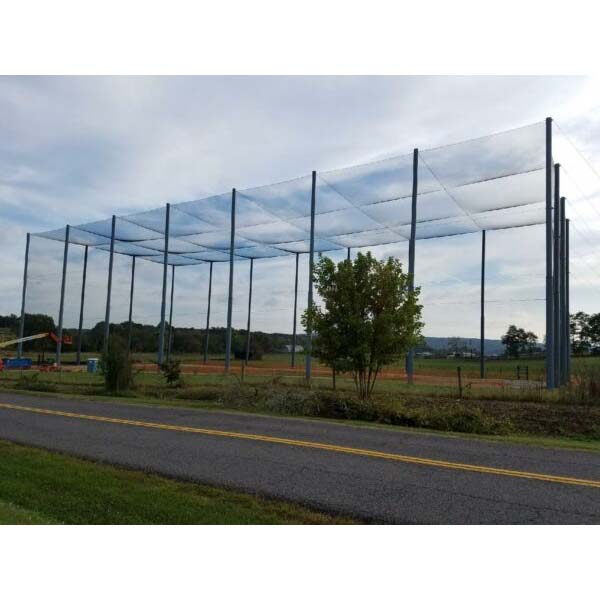
The two primary areas requiring protection in existing prisons are perimeter airspace and outdoor recreation yards. A prison drone net for perimeter and airspace security is typically mounted on wall posts or freestanding poles at 15-30 meter intervals. Each area presents distinct installation considerations:
- Perimeter airspace coverage: Netting is mounted on existing perimeter wall posts or new freestanding poles installed at 15-30 meter intervals along the wall line. Steel cables are tensioned between poles, and netting panels are suspended from this cable grid. This creates a continuous aerial barrier that extends 5-10 meters above the wall height.
- Recreation yard coverage: Larger spans require taller support structures (typically 15-25 meters high) positioned outside the secure perimeter or anchored within reinforced concrete bases inside the yard. Cable-supported catenary net systems are preferred for these wide-span applications as they minimize the number of interior support poles that could present climbing risks.
Key Installation Steps
- Site survey and structural assessment — Engineers evaluate existing perimeter walls, soil conditions for pole footings, and identify potential anchor points. Wind load calculations are performed for the specific facility location.
- Regulatory permit application — Depending on jurisdiction, building permits and airspace coordination notices may be required before installation begins.
- Foundation and pole installation — Concrete footings are poured (typically 1.5-2 meters deep for perimeter poles, 2-3 meters for yard poles). Steel or galvanized poles are erected and cured.
- Cable tensioning system — Stainless steel catenary cables are strung between poles and tensioned to spec. Turnbuckles at each pole allow periodic retensioning.
- Net panel attachment — Custom-fabricated net panels are unrolled along the cable system and secured with corrosion-resistant carabiners or lacing. Panels are overlapped at seams by 30-50 cm to prevent gaps.
- Integration with existing security systems — The net structure can be integrated with CCTV, motion sensors, and lighting for comprehensive situational awareness.
- Testing and certification — Controlled drone flights verify interception capability, and any weak points are reinforced before the system goes live.
Most installations are completed within 4-8 weeks depending on facility size and complexity. Deployment can be phased — starting with the highest-risk zones (e.g., recreation yards or known delivery hot spots) and expanding coverage incrementally as budget allows.
Regulations and Compliance for Prison Drone Countermeasures
One of the most important advantages of physical aerial barrier systems over electronic countermeasures is their favorable regulatory position. Net barriers operate under building and property law, not telecommunications or aviation frequency regulations, which significantly simplifies compliance for any anti-drone net for UK prisons and correctional facilities, European institutions, or American facilities.
Why Net Systems Face Fewer Regulatory Barriers
Electronic drone countermeasures — including RF jammers, GPS spoofers, and directed-energy weapons — are heavily regulated or outright illegal in many jurisdictions. In the United States, federal law prohibits the operation of jamming devices under the Communications Act of 1934, and the FAA strictly limits drone interception technologies that could interfere with manned aircraft. Similarly, the UK's Ofcom and Europe's BEREC impose strict licensing requirements on radio frequency interference devices.
Physical netting systems bypass these regulatory hurdles entirely because they are passive structures. No radio frequencies are transmitted, no aviation signals are disrupted, and no airspace is actively contested. The regulatory requirements that do apply are limited to:
- Building permits — Approval from local building authorities for structural installations, similar to fence or canopy construction
- Structural engineering certification — Verification that the support structure meets wind load and seismic standards for the facility's location
- Airspace notification — In some jurisdictions, notice to aviation authorities that a new vertical structure exists near flight paths (typically required only for poles exceeding a certain height)
- Environmental review — Assessment of any impact on local wildlife, particularly birds, in ecologically sensitive areas
Regional Compliance Summary
| Region | Net System Regulation | Electronic System Regulation |
|---|---|---|
| United States | Minimal — building code only | FAA prohibits most jamming; DHS authorization required |
| United Kingdom | Minimal — planning permission | Ofcom license; Home Office authorization needed |
| European Union | Minimal — local building permits | National frequency authority approval; EASA consultation |
This regulatory simplicity makes net-based countermeasures a particularly attractive option for anti-drone net for US prisons and correctional facilities compared to electronic systems that may require lengthy federal approvals. Similarly, an anti-drone net for European prisons and correctional facilities follows predictable building standards rather than complex telecommunications law.
Prison Drone Net Cost Factors and Budget Planning
Understanding cost and compliance factors is essential for correctional facility budget planning. Unlike complex electronic systems with ongoing software licensing fees, aerial net barrier costs are predominantly upfront infrastructure investments with minimal recurring expenses. Proper prison drone net installation cost and compliance planning ensures facilities can secure funding and meet regulatory requirements efficiently.
Cost Breakdown by Component
| Component | Typical Cost Range | Notes |
|---|---|---|
| Netting material (per m²) | $15 - $45 | Polyethylene is most affordable; aramid and steel are premium options |
| Support poles and foundations | $3,000 - $12,000 per pole | Height, soil conditions, and concrete requirements affect cost |
| Cable tensioning system | $25 - $60 per linear meter | Stainless steel cable with turnbuckles and anchors |
| Installation labor | $20,000 - $100,000 | Varies with facility size and complexity of access |
| Engineering and permits | $5,000 - $25,000 | Structural engineering, site survey, building permits |
| Total estimate (typical facility) | $80,000 - $350,000 | Based on 5,000-20,000 m² of coverage |
Long-Term Cost Advantages
While the initial investment in a prison aerial defense system may seem significant, the total cost of ownership over a 10-year period is often lower than electronic alternatives:
- Zero software licensing fees — Net systems have no annual software subscriptions, unlike detection systems that charge $10,000-$50,000+ per year
- Minimal maintenance — Annual inspection and tensioning typically costs under $5,000, compared to electronic system maintenance contracts of $15,000-$40,000 per year
- No staffing increase — Net systems operate autonomously, while detection systems often require dedicated monitoring personnel
- 30+ year lifespan — Quality netting materials, especially aramid and stainless steel, can last decades with proper maintenance
- Return on investment — The cost of a single major contraband incident (inmate injury, lawsuit, lockdown) can exceed $500,000, making the barrier system cost-effective after preventing just one or two incidents
For budget-constrained facilities, phased installation is a practical approach. Many prisons start with covering the most vulnerable recreation yards or known hot spots, then expand coverage over subsequent budget cycles. Consulting with an anti-drone net supplier for prison facilities early in the planning process can help identify the most cost-effective configuration for a specific facility layout.
Can Drone Nets Distinguish Authorized from Unauthorized Drones?
A common question from correctional facility administrators is whether aerial net barriers can differentiate between authorized aircraft (police helicopters, medical evacuation flights, official drone operations) and unauthorized contraband delivery drones. The short answer is: net systems are physical barriers that block all aerial vehicles equally, so discrimination is achieved through strategic deployment rather than selective interception.
How Facilities Manage Authorized Air Traffic
Rather than requiring the barrier itself to distinguish between drone types, correctional facilities implement operational protocols that separate authorized and unauthorized aerial activity:
- Zoned coverage — Netting is installed over specific at-risk areas (recreation yards, delivery zones, housing blocks) while leaving approach and departure corridors for authorized aircraft unobstructed
- Coordination with law enforcement aviation — Local police and emergency helicopter services are informed of net locations and heights, and flight paths are adjusted accordingly
- Integrated radar cueing — Some advanced systems pair radar detection with motorized net deployment, where the barrier remains retracted during normal conditions and only deploys when the radar identifies a drone-sized, unauthorized trajectory entering protected airspace
- Temporary retraction systems — For facilities that occasionally require drone operations (e.g., for inspection or emergency response), sectioned net panels can be designed with quick-release mechanisms that allow temporary access
Combining Nets with Detection for Intelligent Discrimination
The most sophisticated approach combines physical netting with electronic detection systems. Radar or acoustic sensors scan the airspace continuously, identifying and classifying all aerial contacts. When an authorized aircraft is detected, no action is needed. When an unauthorized drone is identified entering protected airspace, the system can trigger automated responses — including targeted alerts to security staff. Meanwhile, the net provides the ultimate failsafe: even if the detection system fails or staff response is delayed, the physical barrier catches any drone attempting to cross the protected area.
This layered strategy offers the best of both worlds: the Advanced Counter-Drone Solutions for Prisons uses electronic identification for situational awareness while relying on the net for guaranteed physical interdiction. The barrier does not need to distinguish drones — it simply needs to be present and properly positioned to stop them all, while operational protocols ensure authorized aircraft never need to enter net-protected zones.
Conclusion
As drone contraband smuggling continues to challenge correctional facilities worldwide, physical aerial barrier systems have proven to be the most reliable and cost-effective countermeasure available. Unlike detection-only systems that generate alerts without preventing contraband entry, net barriers provide guaranteed interception every time a drone attempts to cross protected airspace.
The key advantages that make these systems the preferred solution include:
- Physical interdiction — Drones are caught, not just detected, eliminating the contraband delivery threat entirely
- Regulatory simplicity — Passive net systems avoid the complex licensing and legal hurdles facing electronic countermeasures
- Cost effectiveness — With typical installation costs of $80,000-$350,000 and minimal ongoing expenses, net systems offer strong ROI compared to recurring software-license models
- Operational autonomy — Net systems require no staffing increase and operate 24/7 without human intervention
- Proven technology — Industrial netting materials with 30+ year lifespans provide durable, long-term protection
For correctional facility administrators evaluating security upgrades, the decision ultimately comes down to a simple question: do you want to know a drone is there, or do you want to stop it? An aerial barrier system provides the answer. Whether you need an anti-drone net for US prisons and correctional facilities or an anti-drone net for UK prisons and European prisons, the solution is the same proven technology. Working with a reliable anti drone net supplier for prison facilities ensures you get a system tailored to your specific security requirements. Contact our team today to discuss a customized solution for your correctional facility.