Introduction
The rapid proliferation of consumer and commercial drones has introduced unprecedented security challenges for airports worldwide. Unauthorized drone incursions near runways, terminals, and tarmac areas pose serious risks to aviation safety, with the potential to cause flight delays, economic losses, and even catastrophic collisions. As airports seek robust countermeasures, the airport drone net has emerged as a proven, physical defense solution that captures drones mid-flight without disrupting critical airport operations.
Unlike electronic countermeasures such as jamming or spoofing, which can interfere with navigation and communication systems, drone nets provide a safe, non-kinetic interception method that protects both aircraft and ground infrastructure. This article explores how physical net systems are deployed for runway and terminal security, examines their integration with existing radar and security infrastructure, compares their safety profile against jamming-based systems, and provides practical guidance on installation costs, regulatory compliance, and system selection for aviation facilities around the world.
Whether you are an airport security manager, a civil aviation authority official, or a procurement specialist evaluating counter drone systems and airport drone protection solutions, this comprehensive guide covers everything you need to know about deploying physical drone containment at your facility.
The Growing Drone Threat at Airports Worldwide
Unauthorized drone activity near airports has escalated dramatically over the past decade. In 2018, London Gatwick Airport suffered a three-day shutdown caused by repeated drone sightings, disrupting over 1,000 flights and affecting approximately 140,000 passengers at an estimated cost of £50 million. Similar incidents have been reported at Dubai International, Newark Liberty, Frankfurt, and Singapore Changi airports, highlighting the global nature of the threat.
The danger is not hypothetical. A drone strike on an aircraft engine, windshield, or control surface during takeoff or landing — the most critical phases of flight — could result in catastrophic loss of life. Even a drone weighing less than two kilograms can cause severe damage when ingested into a jet engine at high speed. Beyond collisions, drones can also be used for malicious surveillance of airport facilities, smuggling contraband onto aircraft, or as delivery platforms for harmful payloads.
Traditional airport perimeter security measures — fences, patrols, CCTV — are ineffective against drones, which can fly over walls at speeds exceeding 50 mph. This gap has driven demand for specialized drone protection net for airport perimeter systems that provide a physical barrier against aerial intrusions. Unlike detection-only systems that simply alert security personnel, airport perimeter anti-drone netting system installations actively neutralize the threat by capturing drones in mid-air, preventing them from reaching protected zones.
The aviation industry has responded by developing best practices for counter-drone deployment at civilian airports, emphasizing layered security approaches that combine detection, tracking, and physical interdiction. Among these best practices, physical capture using nets has become the preferred method for terminals and runways where electronic countermeasures could inadvertently affect aircraft systems.
How Airport Drone Nets Protect Runways and Terminals
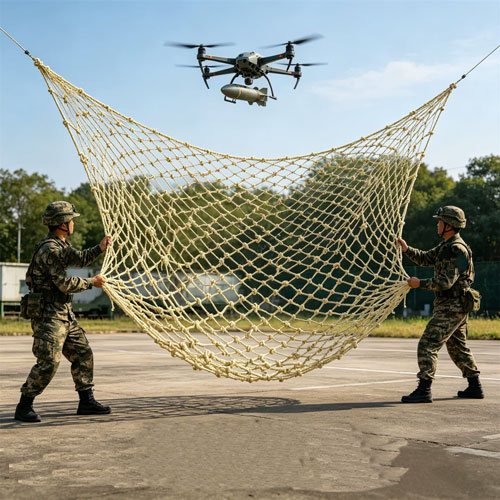
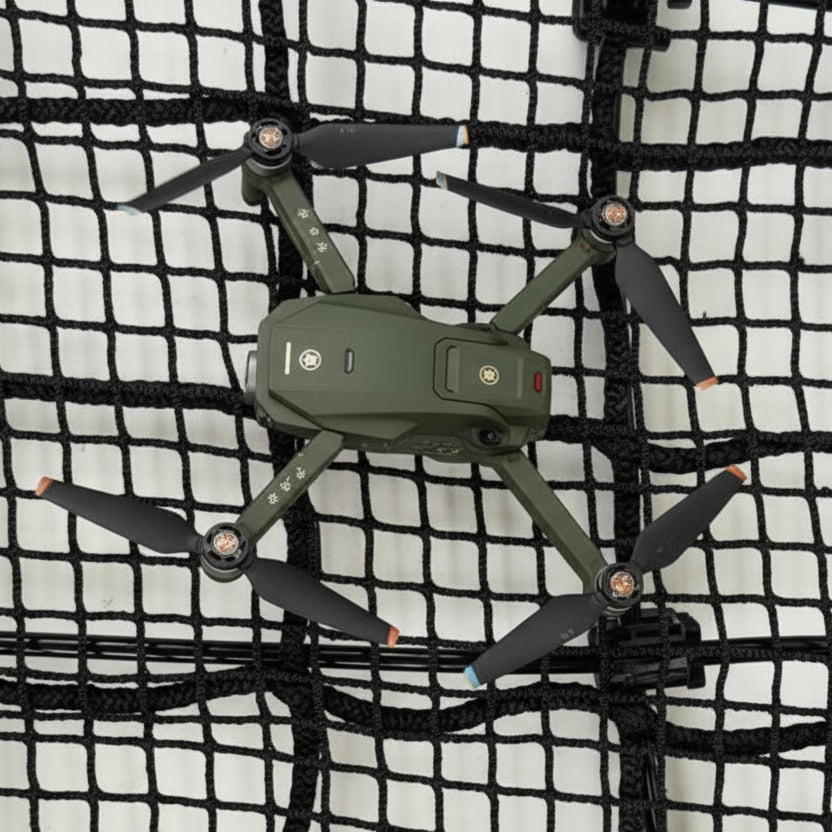
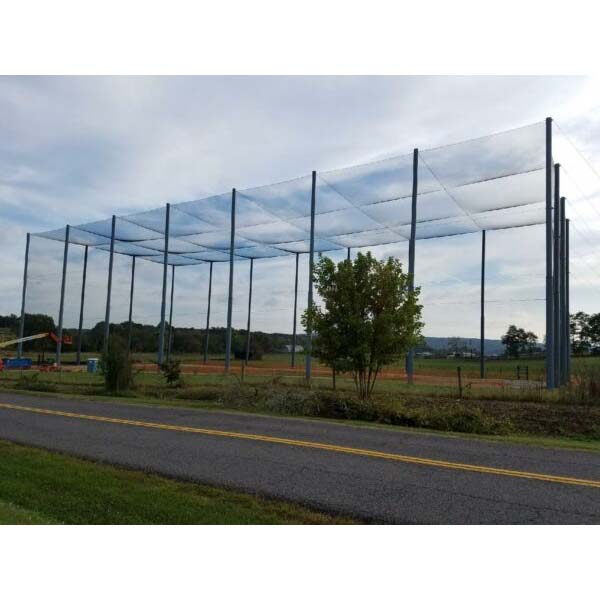
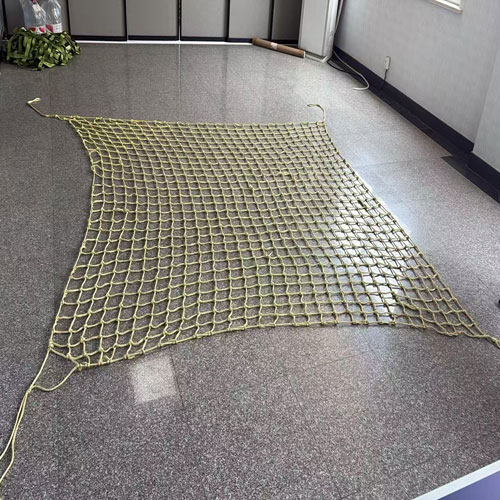
A physical capture system is designed to intercept and neutralize unauthorized drones before they can enter protected airspace. The system typically consists of high-tensile, lightweight netting material launched vertically from ground-based deployment units, creating a three-dimensional capture zone that drones cannot penetrate. When a drone flies into the net, its propellers become entangled in the mesh, causing an immediate controlled descent or safe capture within the net structure.
Drone Net for Runway Approach Protection
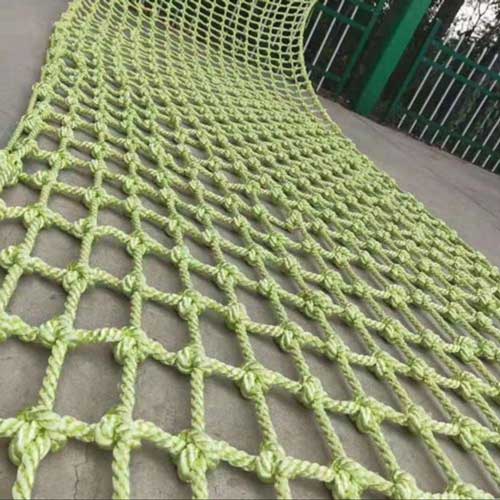
The runway approach corridor is the most safety-critical zone at any airport. A dedicated capture net for runway approach protection is specifically engineered to create an exclusion zone along the final approach and departure paths. These nets are deployed at heights of 30–100 meters using pneumatically or pyrotechnically launched projectiles that carry the net across wide areas in seconds. Multiple nets can be arranged in overlapping patterns to form a continuous barrier spanning hundreds of meters. The netting material — typically made from Dyneema, Kevlar, or aramid fibers — is UV-resistant, weatherproof, and designed to withstand years of outdoor exposure without degradation. Crucially, the net is wide-gauge enough to avoid creating a collision hazard for birds and is clearly marked with visual indicators for pilots during approach.
Terminal, Tarmac, and Perimeter Security Coverage
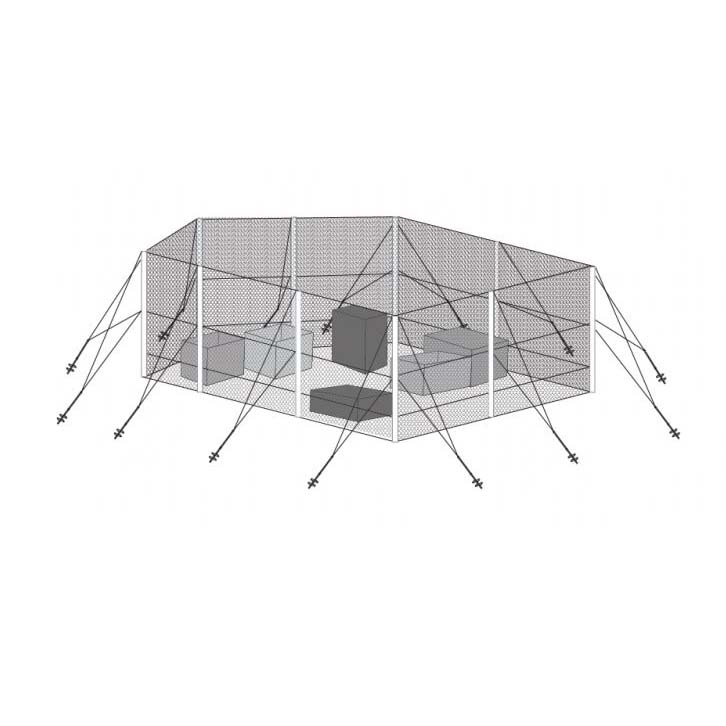
Beyond runway protection, net-based solutions for terminal and tarmac security address the unique challenges of protecting passenger boarding areas, baggage handling zones, and aircraft parking aprons. Terminal environments require systems that can deploy rapidly in response to detected threats while remaining unobtrusive during normal operations. Fixed-mount net launchers positioned on terminal rooftops, air traffic control towers, and perimeter masts provide 360-degree coverage of the airside environment. These systems are integrated with airport security operations centers, enabling automatic deployment when radar or radio-frequency sensors detect a drone breaching predefined geofences.
For comprehensive coverage, an airport containment net for no-fly zone enforcement combines multiple net deployment stations with intelligent command-and-control software. This creates a virtual dome of physical protection over the entire airport footprint. The net stands as a permanent deterrent — most drone operators, upon seeing physical barriers, divert their aircraft rather than risk entanglement and loss of their equipment.
Drone Capture Net vs Drone Jamming: A Safety Comparison for Airports
One of the most frequently asked questions by airport security teams is whether a physical drone capture net or an electronic jamming system is the safer choice for aviation environments. The answer has significant implications for safety, regulatory compliance, and operational continuity.
Drone jamming systems work by broadcasting radio-frequency signals that disrupt the communication link between a drone and its operator, forcing the drone to land, return to home, or fall from the sky. While effective in some contexts, jamming poses serious risks in an airport environment. The same radio frequencies used by consumer drones — predominantly 2.4 GHz and 5.8 GHz — are also used by aircraft communication systems, air traffic control radars, and airport ground operations networks. Jamming can inadvertently interfere with:
- Air traffic control communications — potentially blocking critical pilot-controller voice channels
- Instrument landing systems (ILS) — disrupting approach guidance for aircraft on final approach
- Ground radar and surveillance equipment — creating blind spots in airport monitoring
- Airport Wi-Fi and operational networks — affecting baggage handling, check-in, and security systems
Furthermore, a jammed drone that falls uncontrolled from the sky becomes a falling hazard, potentially landing on runways, taxiways, or terminal buildings. In contrast, when a drone is intercepted by a physical capture net, it is safely contained — there is no electronic interference with airport systems, no risk of collateral damage, and the drone is retrieved intact for forensic analysis.
Aviation authorities including the FAA and EASA have issued clear guidance that passive detection combined with physical capture is the preferred approach for drone mitigation at airports, especially in safety-critical zones. This comparison strongly favors net-based systems for aviation applications. Nets provide the equivalent of a physical safety barrier — analogous to crash barriers on a highway — while jamming is closer to disabling a vehicle brakes remotely, with unpredictable consequences.
Counter drone systems and airport drone protection strategies that combine radar detection with net-based interdiction represent the current best practice for maintaining both security and safety in the aviation environment.
Integrating Drone Nets with Airport Radar and Security Systems
A net-based capture system is most effective when integrated into a broader security ecosystem. Modern airport security operations centers (SOCs) already manage radar, CCTV, access control, and perimeter intrusion detection systems. Adding physical drone capture capabilities to this infrastructure requires thoughtful integration at both the hardware and software levels.
The typical integration workflow begins with detection. Airport-grade radar systems — including X-band and S-band primary surveillance radars, as well as dedicated drone-detection radars — identify and track unauthorized drones entering the airport's protected airspace. These radar feeds are fed into a command-and-control (C2) platform that fuses data from multiple sensors, including:
- Primary surveillance radar (PSR) — detects all aircraft and drones within airport airspace, regardless of transponder status
- Radio-frequency (RF) scanners — identify drone control signals and telemetry, often providing make/model identification
- Optical and thermal cameras — provide visual confirmation and tracking of the drone target
- Acoustic sensors — detect the unique sound signatures of drone propellers and motors
Once the C2 platform confirms a drone is within the protected zone and poses a threat, it automatically calculates the optimal interception point and triggers the nearest net deployment station. The entire sequence — from detection to net launch — can occur in under ten seconds, ensuring the drone is captured before it can reach the runway or terminal.
Integration with existing airport security systems also means that net deployments are automatically logged, timestamped, and correlated with radar tracks and video footage for post-incident analysis. This data is invaluable for regulatory reporting, insurance claims, and continuous improvement of best practices for counter-drone deployment at civilian airports.
API connectivity allows the net system to interface with airport operational databases, flight information display systems (FIDS), and air traffic control automation platforms. This ensures that deployments are coordinated with flight operations — for example, avoiding deployment when aircraft are on short final approach unless absolutely necessary. Smart zoning capabilities allow airport security teams to define graduated response levels, with different zones (runway, taxiway, terminal, perimeter) having different engagement rules based on risk tolerance and operational impact.
Regulations for Anti-Drone Systems at Airports
Compliance with aviation regulations is a critical consideration when deploying any drone mitigation system at an airport. The regulatory landscape governing net-based counter-drone systems varies by jurisdiction, but several common frameworks have emerged.
In the United States, the Federal Aviation Administration (FAA) regulates all drone countermeasures through its Unmanned Aircraft Systems (UAS) Detection and Mitigation program. An FAA compliant anti-drone net US system must meet strict requirements regarding radio-frequency emissions, physical safety, and operational protocols. The FAA has authorized select airports — including those designated under the Airport Improvement Program — to deploy drone detection and mitigation systems through a formal authorization process. Physical capture systems like drone nets generally face fewer regulatory hurdles than electronic countermeasures, since they do not emit any signals that could interfere with aircraft navigation or communication systems.
In Europe, the European Union Aviation Safety Agency (EASA) has issued regulatory guidance through its UAS regulatory framework. An EASA approved anti-drone netting for European airports system must demonstrate compliance with safety objectives related to collateral damage risk, operational reliability, and data privacy. Several European airports, including those in the UK, Germany, and France, have received approval to deploy net-based drone capture systems as part of their security infrastructure.
For airports in the Middle East and Asia, national civil aviation authorities typically follow a combination of international standards (ICAO, FAA, EASA) with local adaptations. The anti-drone net for Qatar and Dubai airport security market, for example, has been particularly active, with Hamad International and Dubai International airports both deploying net-based counter-drone systems to protect their world-class facilities. Similarly, the anti-drone net for Indian airports and border security sector is expanding rapidly as India modernizes its aviation security infrastructure under the Bureau of Civil Aviation Security (BCAS) guidelines.
The anti-drone net for UK airports and seaports follows regulations set by the UK Civil Aviation Authority (CAA) and the Department for Transport. UK airports have been early adopters of net-based systems, driven by high-profile drone incidents at Gatwick and Heathrow that demonstrated the limitations of existing security measures.
Regardless of jurisdiction, key regulatory requirements typically include:
- Proof that the system does not emit RF energy that could interfere with aircraft systems
- Demonstration of safe drone capture and controlled descent mechanisms
- Data protection and privacy compliance for any surveillance cameras or sensors
- Operational integration with air traffic control procedures
- Regular maintenance and testing schedules
- Incident reporting and forensic analysis protocols
Drone Net Installation Cost and Requirements for Airport Facilities
Understanding the installation cost and requirements for a drone capture system is essential for budgeting and planning. The total investment depends on multiple factors, including the size of the airport, the number of protected zones, the type of netting system selected, and the complexity of integration with existing security infrastructure.
Airport Anti-Drone Net Price Overview
The airport anti drone net price varies significantly based on system configuration. Below is a general cost breakdown for different deployment scales:
| System Scale | Coverage Area | Estimated Cost (USD) | Typical Components |
|---|---|---|---|
| Single-point perimeter | 1–2 deployment stations | $50,000 – $150,000 | 2 net launchers, radar integration, C2 software |
| Regional airport | Runway + terminal zone | $200,000 – $500,000 | 4–6 net stations, radar + RF sensors, CCTV integration |
| International hub | Full airport perimeter + multiple runways | $500,000 – $1,500,000 | 12+ net stations, multi-sensor fusion, full SOC integration |
| Major hub with layered defense | Multiple zones + approach corridors | $1,500,000 – $3,000,000+ | 20+ stations, AI-driven C2, full multi-layer defense |
Installation Cost Factors
Several factors influence the final installation cost for any specific facility:
- Airport size and layout — Larger airports with multiple runways, terminals, and support facilities require more net deployment stations and more complex zoning.
- Regulatory approval process — Obtaining FAA, EASA, or local CAA authorization involves application fees, compliance testing, and documentation that can add 10–20% to project costs.
- Infrastructure readiness — Airports without existing radar coverage or fiber-optic backbone for data transmission will need additional infrastructure investment.
- Installation complexity — Retrofitting net deployment stations onto existing terminal rooftops, control towers, and perimeter posts requires structural assessments and potentially reinforcement work.
- Training and maintenance — Ongoing costs include annual system maintenance, replacement netting cartridges, staff training, and software updates. Typical annual maintenance runs 5–10% of the initial installation cost.
While the anti drone net cost may seem substantial, it must be weighed against the financial impact of a single drone incident. The Gatwick shutdown alone cost an estimated £50 million in airline disruption, passenger compensation, and reputation damage. For most airports, the investment in a net-based counter-drone system pays for itself after preventing even one major disruption event.
What Happens When a Drone Is Intercepted by a Safety Net?
Understanding the interception sequence helps airport security teams, air traffic controllers, and stakeholders appreciate how a physical drone capture system safely neutralizes threats. The process follows a carefully engineered sequence designed to minimize risk to people, aircraft, and infrastructure.
Step 1: Detection and Tracking — The airport detection system identifies an unauthorized drone entering protected airspace. Radar, RF sensors, and optical cameras track the drone's position, speed, heading, and altitude in real time. The command-and-control system confirms the drone is not a cooperative aircraft (ADS-B verified) and assesses its threat level based on proximity to runways, flight paths, and terminal buildings.
Step 2: Engagement Decision — The system automatically calculates the optimal interception point and selects the nearest net deployment station. For runway threats, this decision is typically automated with air traffic control notification. For perimeter incursions or non-critical zones, a human operator may confirm the engagement. The entire decision process takes under five seconds from first detection.
Step 3: Net Launch and Capture — The deployment station launches a high-tensile capture net at precisely the calculated trajectory. The net, weighing approximately 2–5 kilograms and spanning 15–30 square meters when fully opened, deploys in under two seconds. It is designed to fully envelop the drone, causing its propellers to become entangled in the mesh fibers. Modern netting materials are flexible enough to absorb the kinetic energy of the impact without damaging the drone's battery or sensitive electronics — a critical safety feature that prevents battery fires or explosions.
Step 4: Controlled Descent or Retrieval — Once captured, the entangled drone either descends slowly to the ground under a small parachute attached to the net (for mobile systems) or is winched back to the deployment station (for fixed installations). In either case, the drone's battery and payload remain intact, enabling forensic examination of the drone's flight path, operator identity, and any carried contraband. The entire interception takes 30–60 seconds from launch to ground retrieval.
Step 5: Post-Incident Analysis — After capture, the incident is automatically logged in the security management system. The radar track, video footage, net deployment telemetry, and drone forensic data are correlated into a single incident report. This documentation is critical for regulatory compliance, legal proceedings, and insurance claims. The containment net for no-fly zone enforcement ensures that the intruder cannot escape or continue its mission.
This physical interception process contrasts sharply with jamming-based approaches, where the drone may crash unpredictably, land in an unreachable location, or be damaged beyond forensic utility. A net-based capture approach provides clean, safe, and forensically valuable interdiction every time.
Global Airport Deployments: Case Studies
Real-world deployments demonstrate the effectiveness of net-based counter-drone systems across diverse operational environments. The following case studies illustrate how different types of airports have implemented physical drone capture technology.
UK Airports and Seaports
Following the Gatwick drone incident in 2018, UK airports became early adopters of physical net-based counter-drone systems. The anti-drone net for UK airports and seaports market has matured rapidly, with systems deployed at major hubs including Heathrow, Gatwick, Manchester, and London City airports. UK deployments typically emphasize rapid-response mobile net systems that can be repositioned based on changing wind patterns, runway configurations, and threat assessments. The UK Civil Aviation Authority has established a framework for evaluating and approving net-based systems, focusing on safety case assessments that demonstrate no risk to aircraft operations. Seaports including Southampton and Felixstowe have also adopted similar net technology to protect critical maritime infrastructure from drone surveillance and smuggling attempts.
Qatar and Dubai Airport Security
The Middle East has invested heavily in aviation security, with the anti-drone net for Qatar and Dubai airport security sectors representing some of the most sophisticated deployments globally. Hamad International Airport in Doha and Dubai International Airport — two of the world's busiest hubs for international travel — have deployed integrated net systems as part of their multi-layered security architecture. These installations cover not only runways and terminals but also VIP facilities, cargo terminals, and fuel storage areas. The deployment at Hamad International is particularly notable for its integration with the airport's advanced air traffic management system, enabling seamless coordination between drone defense and flight operations. The harsh desert environment — with extreme heat, blowing sand, and high humidity — has driven innovations in netting material durability and deployment mechanism reliability that benefit installations worldwide.
Indian Airports and Border Security
India's rapidly expanding aviation sector has made anti-drone net for Indian airports and border security a priority for the Bureau of Civil Aviation Security (BCAS). Major airports including Delhi Indira Gandhi International, Mumbai Chhatrapati Shivaji Maharaj, and Bengaluru Kempegowda International have all deployed or are in the process of deploying net-based counter-drone systems. The unique challenge for Indian airports is the combination of high passenger traffic, complex airspace shared with military operations, and proximity to sensitive border regions. Net-based systems have proven particularly suitable for Indian conditions because they work effectively in the dense electromagnetic environment of major cities, unlike jamming-based systems that could interfere with urban communication networks. Additionally, Indian border security forces have adapted net technology for perimeter defense at sensitive air force bases and border airstrips.
How to Choose the Right Drone Capture System for Your Airport
Selecting the right net-based system for your facility requires a systematic evaluation of operational requirements, regulatory context, and budget constraints. Here is a structured framework to guide decision-makers through the selection process.
Step 1: Conduct a Threat and Risk Assessment — Before evaluating any system, commission a professional threat assessment that identifies the specific drone risks facing your airport. Consider factors such as geographic location (proximity to drone hobbyist areas, border regions, or conflict zones), historical incident data, passenger throughput, and critical infrastructure dependencies. This assessment will define the protection zones, response time requirements, and system redundancy levels needed.
Step 2: Define Coverage Zones — Map out the specific areas requiring protection: runways and approach corridors, taxiways, terminal buildings and gates, cargo facilities, fuel storage, air traffic control towers, and perimeter boundaries. Each zone may require a different type of net deployment — fixed overhead nets for terminal areas, rapid-launch nets for runway protection, and perimeter-mounted systems for boundary security. An airport drone net for runway approach protection will have different specifications than a drone protection net for airport perimeter, and the system design must accommodate these variations.
Step 3: Evaluate Integration Requirements — Assess your airport's existing security infrastructure. Does your airport have operational radar coverage suitable for drone detection? Is there a security operations center with C2 capabilities? What sensor types are already deployed? The ideal capture system should integrate seamlessly with existing detection assets rather than requiring a complete sensor replacement. Look for systems that offer open API architectures, standard data formats (STANAG 4609 for video, ASTERIX for radar), and proven integration with major airport security platforms.
Step 4: Verify Regulatory Compliance — Engage with your national civil aviation authority early in the selection process. Confirm that the net system you are considering has been approved or is eligible for approval in your jurisdiction. For US airports, this means FAA compliant anti-drone net US systems with documented authorization pathways. For European airports, prioritize EASA approved anti-drone netting for European airports solutions. Request documentation of approvals, test results, and operational certifications from vendors.
Step 5: Compare Total Cost of Ownership — Look beyond the initial airport anti drone net price to evaluate the full lifecycle cost. Consider installation, integration, training, annual maintenance, replacement netting consumables, software updates, and technical support. Request references from airports of similar size and operational profile, and conduct site visits to see systems in operation. A more expensive system with proven reliability, comprehensive integration support, and strong local service may offer better long-term value than a lower-cost alternative.
Step 6: Plan for Operations and Training — A capture system is only effective if airport security staff are properly trained to operate it. Ensure the vendor provides comprehensive training programs for operators, supervisors, and maintenance technicians. Develop standard operating procedures that cover detection response, engagement authorization, air traffic coordination, post-incident procedures, and system testing. Regular drills and exercises should be conducted to maintain readiness.
Step 7: Request a Demonstration and Pilot — Before committing to a full deployment, arrange for a demonstration or pilot installation at your airport. A live test with representative drone types — from small consumer quadcopters to larger commercial UAVs — will validate the system's capture effectiveness, response time, and integration performance in your specific operational environment.
By following this systematic approach, airport security teams can confidently select the system that best matches their facility's unique requirements, regulatory obligations, and budget parameters.
Conclusion
The threat posed by unauthorized drones to airport operations is real, growing, and unlikely to diminish. As drone technology becomes more accessible and capable, the potential for disruption — whether from careless hobbyists, malicious actors, or commercial drone operators violating airspace restrictions — will continue to increase. Airports that delay investing in counter-drone capabilities risk significant operational, financial, and reputational damage.
The physical drone capture net has proven itself as the safest, most reliable, and most regulation-friendly solution for protecting runway approaches, terminals, tarmacs, and perimeter zones. Unlike electronic countermeasures that interfere with the very radio spectrum that aviation depends on, physical net capture provides a clean, deterministic, and forensically valuable interception. The technology is mature, with proven deployments at major international airports across the UK, Europe, the Middle East, and Asia.
When evaluating counter drone systems and airport drone protection solutions, consider the full picture: not just the anti drone net cost but the value of preventing a single Gatwick-scale disruption; not just the technical specifications but the regulatory approval pathway; not just the hardware but the integration with your existing security operations. The right net-based system, properly deployed and integrated, provides a permanent physical barrier against aerial threats, giving airport operators, air traffic controllers, and passengers the confidence that their safety is protected by more than just detection — it is protected by physical containment.
For airport security teams ready to move beyond detection-only approaches, airport perimeter anti-drone netting system installations represent the gold standard in aviation drone defense. Contact our team to discuss your airport's specific requirements and learn how our FAA and EASA-compliant net systems can be tailored to protect your facility.