Introduction
The rapid proliferation of consumer and commercial drones has created an urgent need for effective countermeasure systems. Among the most reliable and widely adopted solutions is the anti-drone net — a non-kinetic, physical interception tool designed to capture or disable unauthorized unmanned aerial vehicles (UAVs). But how do anti drone nets work at a technical level? This guide breaks down the complete technology behind anti-drone netting systems, from materials science to field deployment strategies. Understanding how do anti drone nets work is essential for anyone evaluating counter-UAS solutions, as these systems offer a unique combination of reliability and safety.
Unlike electronic jamming systems that disrupt radio signals or GPS, anti-drone nets provide a tangible, verifiable method of drone capture. They pose minimal risk to surrounding infrastructure, produce no electronic interference, and can be deployed in environments where RF-based countermeasures are restricted. Understanding the working principles of these nets is essential for security professionals, military planners, and infrastructure operators evaluating counter-UAS solutions.
How Do Anti Drone Nets Work: The Physical Interception Mechanism
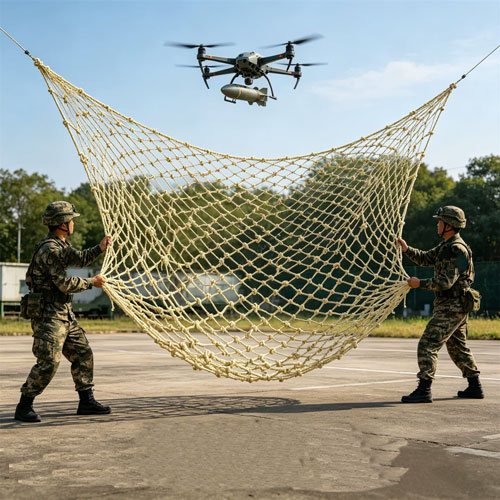
At their core, anti drone nets work through a straightforward physical principle: intercepting a drone mid-flight and entangling its rotors and airframe so it can no longer maintain controlled flight. The mechanism involves three sequential stages: detection, launch, and entanglement. To truly understand how do anti drone nets work, you need to examine each stage in detail.
Detection and Tracking
Before the net can be deployed, the drone must first be identified and tracked. Most integrated systems use radar, radio frequency (RF) scanners, or optical sensors to detect the UAV and calculate its flight path. This data feeds into a fire-control system that determines the optimal launch window.
Net Launch and Deployment
Once the system locks onto the target, the net is propelled toward the drone using one of several launch methods: compressed gas canisters, pyrotechnic charges, or electric actuators. The net unfolds during flight, expanding from a compact package to a wide capture surface — typically 3 to 5 meters across. The launch velocity ranges from 40 to 80 meters per second depending on the system, giving the net an effective engagement range of approximately 10 to 100 meters.
Entanglement and Capture
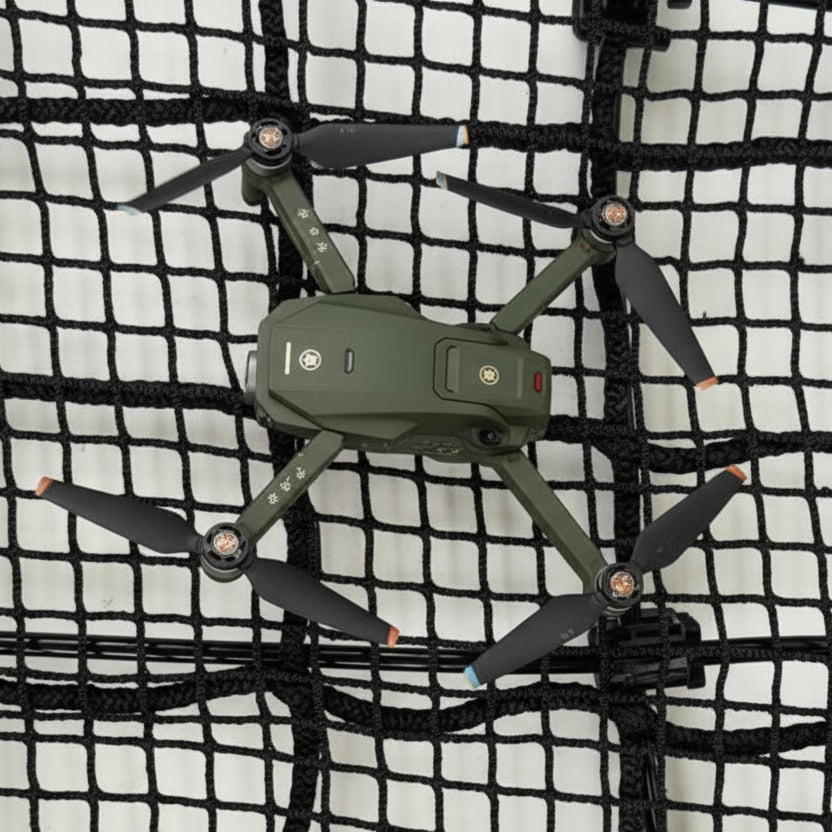
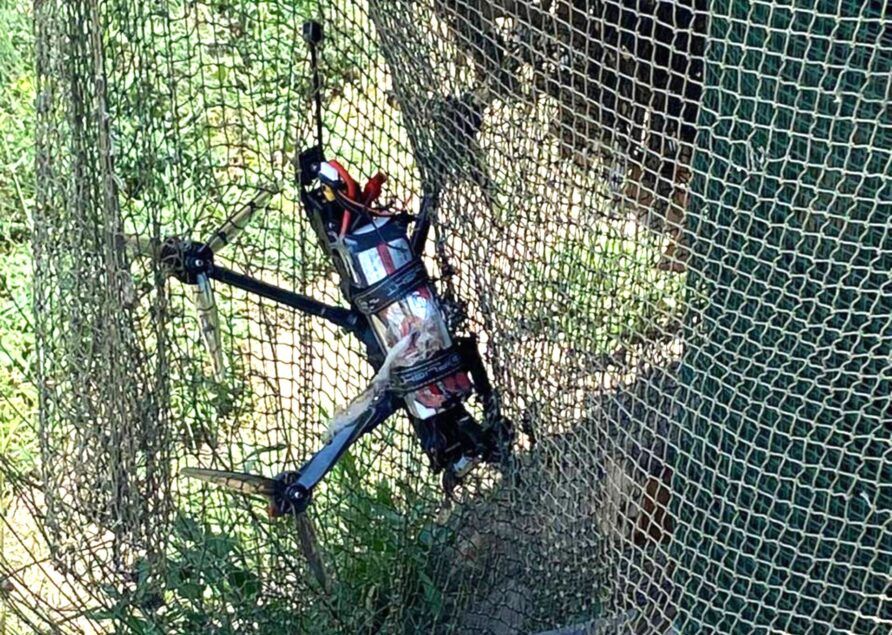
As the net contacts the drone, its loose structure drapes over the rotors and airframe. The spinning rotor blades catch the netting fibers and rapidly wrap them around the motor shafts, causing immediate loss of thrust. Within milliseconds, the drone becomes unable to generate lift and either descends under a parachute (if attached) or falls to the ground. The physical interception mechanism ensures that even autonomous drones operating on pre-programmed flight paths cannot evade capture once the net makes contact.
The Science Behind Anti-Drone Netting Technology
The science behind drone netting technology draws from multiple engineering disciplines, including aerodynamics, textile engineering, and ballistics. Understanding these scientific principles explains why anti-drone nets have become a preferred counter-UAS method.
Net Aerodynamics and Drag Dynamics
When deployed, the net must maintain its shape and trajectory despite significant air resistance. Engineers design the net mesh with carefully calculated porosity — typically 60-70% open area — to balance drag reduction with capture effectiveness. Too dense, and the net slows too quickly; too open, and small drones might pass through. Computational fluid dynamics (CFD) modeling optimizes the mesh pattern for specific drone size ranges.
Ballistic Trajectory and Accuracy
The net projectile follows a predictable ballistic arc after launch. Modern systems incorporate real-time wind compensation and lead calculation to ensure the net arrives at the interception point simultaneously with the drone. The net ballistics are calibrated for each launch system, accounting for net weight (typically 200-500 grams), launch pressure, and environmental conditions. Some advanced systems use guided micro-projectiles that steer the net toward the target mid-flight.
Kinetic Energy Transfer
Upon impact, the net transfers its kinetic energy to the drone while simultaneously absorbing the drone forward momentum. The netting material stretches slightly on impact — this elasticity prevents the net from bouncing off the drone and instead allows it to conform around the airframe. The capture probability is maximized when the net strikes the drone at an approach angle of 15-30 degrees relative to the flight vector, a finding validated through extensive field testing.
What Materials Are Anti-Drone Nets Made Of?
The effectiveness of any anti-drone netting system depends heavily on the materials used in its construction. Modern anti-drone nets are engineered from advanced polymers and high-strength fibers selected for specific performance characteristics.
Primary Material: High-Tensile Polyethylene (HTPE)
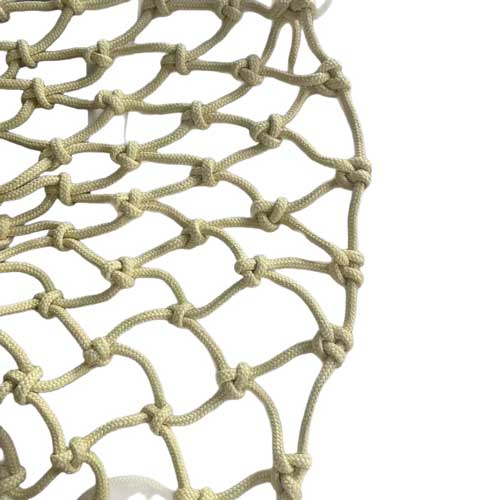
Most commercial anti-drone nets use braided high-tensile polyethylene fibers as their base material. HTPE offers an exceptional strength-to-weight ratio — it is 15 times stronger than steel by weight while remaining lightweight enough for projectile deployment. The fiber diameter typically ranges from 0.5 to 2.0 millimeters, with breaking strengths exceeding 500 Newtons per strand.
Aramid Fibers (Kevlar)
For military-grade applications, nets incorporate aramid fibers like Kevlar to provide additional cut resistance. Kevlar-reinforced nets can withstand contact with sharp carbon-fiber propeller blades without fraying or snapping. These anti-drone netting materials are essential when engaging drones equipped with reinforced or metal-tipped rotors.
UV-Resistant Coatings and Weather Protection
Outdoor-deployed nets receive specialized UV-stabilized coatings that prevent polymer degradation from prolonged sun exposure. Common coatings include polyurethane and silicone-based treatments that also provide water resistance. The coating adds approximately 10-15% to the net weight but extends service life by 3-5 times compared to uncoated alternatives.
Material Specifications Comparison
| Material | Tensile Strength | Weight per m² | UV Resistance | Typical Use |
|---|---|---|---|---|
| HTPE | 500+ N/strand | 80-120 g | Moderate | Standard deployments |
| Kevlar blend | 800+ N/strand | 150-200 g | Low | Military/high-threat |
| Nylon composite | 300+ N/strand | 100-140 g | High | Fixed installations |
How Are Anti-Drone Nets Deployed in the Field?
Anti-drone nets can be deployed in the field through several distinct platforms, each suited to different operational scenarios. The deployment method directly affects the effective range, response time, and coverage area of the system.
Handheld Launcher Systems
The most portable option is the handheld net launcher, often resembling a shoulder-fired weapon. These systems use compressed CO₂ cartridges or small pyrotechnic charges to propel a folded net toward the target. A typical handheld unit weighs 4-8 kg loaded, has an effective range of 10-30 meters, and can be readied for firing in under 3 seconds. These are ideal for VIP protection details, patrol units, and rapid response teams who need mobility.
Vehicle-Mounted Systems
For perimeter security at airports, military bases, and critical infrastructure, vehicle-mounted net launchers provide greater range and ammunition capacity. Mounted on armored vehicles or pickup trucks, these systems carry 5-15 net cartridges and feature automated targeting with radar or EO/IR sensors. Engagement ranges reach 50-100 meters with higher launch consistency due to the stabilized mounting platform.
Interceptor Drone Payloads
One of the most innovative deployment methods uses a dedicated interceptor drone that carries the net aloft. The interceptor flies toward the target drone and releases the net at close range, or physically rams the target with a net-gun attachment. This approach is particularly effective against agile, fast-moving drones that ground-based launchers struggle to track. The counter-UAS net deployment via interceptor drone extends the engagement envelope to several hundred meters horizontally and vertically.
Fixed Perimeter Net Systems
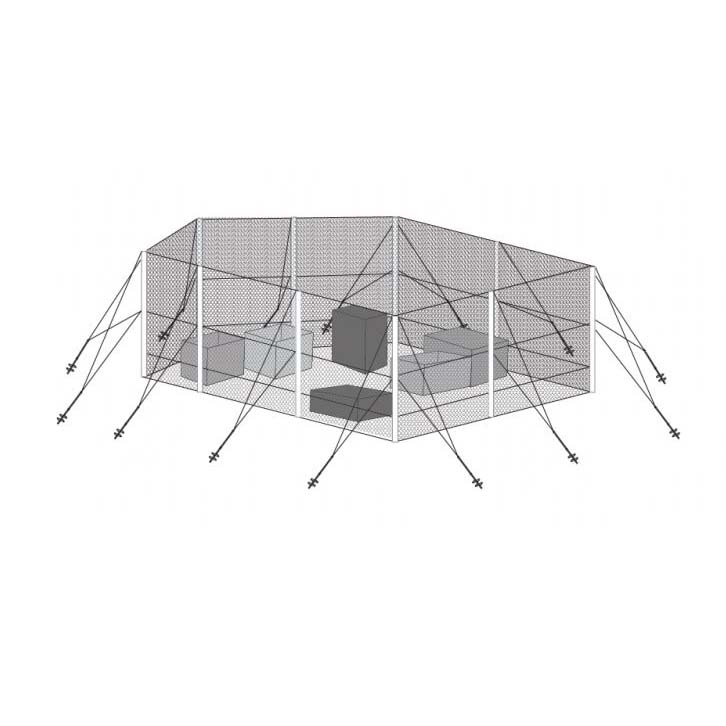
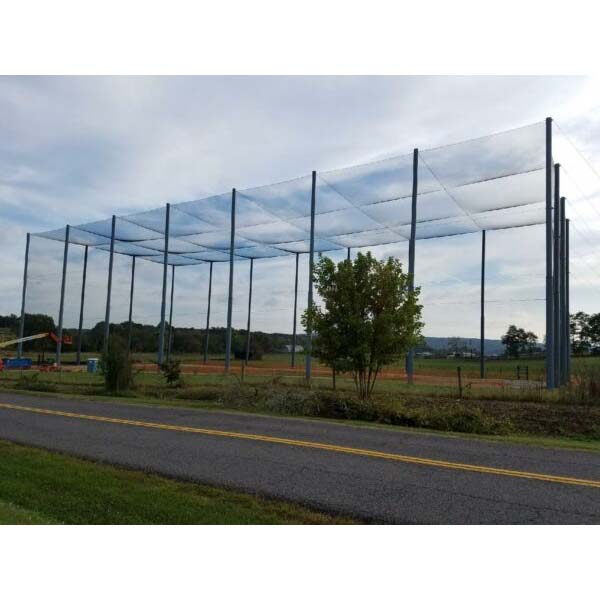
For continuous protection of sensitive sites, fixed net arrays can be installed around the perimeter. These systems consist of multiple launcher pods positioned at calculated intervals, covering defined approach vectors. When a drone is detected crossing the perimeter, the nearest launcher automatically fires. Fixed installations are commonly used at prisons, government facilities, and stadiums.
Can Drones Escape from Anti-Drone Nets?
A critical performance question for any counter-UAS system is whether the target can escape after the capture attempt. Can drones escape from anti-drone nets? The answer depends on several factors, but modern net designs incorporate specific features to minimize escape probability.
Self-Tightening Entanglement Mechanism
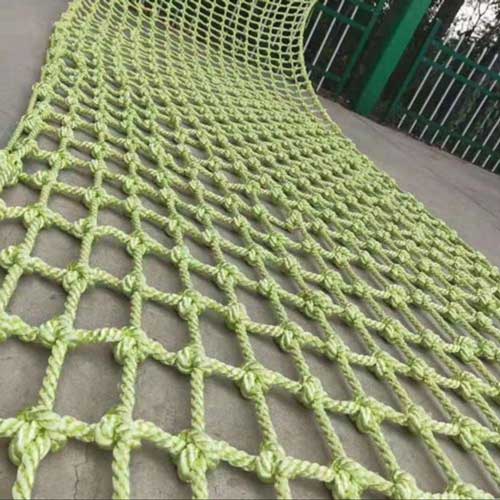
Most anti-drone nets are engineered with a self-tightening geometry. The net mesh includes slip knots or constricting loops that cinch tight when tension is applied. As the drone rotates its propellers to escape, the net fibers pull tighter around the motor housings and rotor arms. This creates a positive feedback loop — the more the drone struggles, the more firmly it becomes entangled. Field tests show that once a net makes contact with a multi-rotor drone, the entanglement probability exceeds 95% within the first two seconds.
Factors That Allow Escape
Escape is most likely in the following scenarios:
- Fixed-wing drones: Aircraft-style drones with no exposed rotors are harder to entangle because the net slides off smooth fuselage surfaces. Dedicated fixed-wing capture nets use trailing line designs that snag wing tips or control surfaces.
- Partial contact: If only the edge of the net grazes the drone, the entanglement force may be insufficient to stop it. However, most systems require only 30% coverage to initiate capture.
- Heavily armored drones: Military-grade drones with reinforced propeller cages can shred some net types before entanglement occurs. Kevlar-reinforced nets address this vulnerability.
Empirical Capture Success Rates
Operational data from deployed systems indicates a single-shot capture success rate of 85-92% against consumer and commercial quadcopters. With a two-shot salvo, the success rate rises to 97-99%. These figures place anti-drone nets among the most reliable physical anti-drone net effectiveness solutions available.
Are Anti-Drone Nets Effective Against Military Drones?
The question "Are anti-drone nets effective against military drones?" requires a nuanced answer. Military drones present fundamentally different challenges compared to consumer quadcopters — they are larger, faster, more maneuverable, and often equipped with countermeasures. Determining are anti-drone nets effective in military contexts depends heavily on the specific threat category and operational conditions.
Military Drone Threat Categories
Military UAVs can be broadly divided into three categories with different implications for net-based interception:
- Small tactical drones (Group 1-2): Weighing under 25 kg, these include systems like the DJI Mavic military variants and small reconnaissance quadcopters. Anti-drone nets are highly effective against this class, with success rates similar to consumer drone interception.
- Medium tactical drones (Group 3): Weighing 25-150 kg, these include systems like the ScanEagle and Raven. These drones often have fixed-wing designs or armored rotor housings. Specialized heavy-duty nets with reinforced Kevlar construction are required, and success rates drop to 70-85%.
- Large combat drones (Group 4-5): Weighing over 150 kg (Predator, Reaper class), these are generally outside the effective envelope of net-based systems due to their size, speed, and altitude.
Effectiveness Factors
Military drones often incorporate counter-countermeasure features that reduce net effectiveness. These include propeller guards, armored rotor assemblies, and redundant flight controllers that can maintain flight with partial rotor loss. However, even partially entangled military drones are typically forced to abort their mission, making the net an effective deterrent even when full capture is not achieved.
The effectiveness against military drones also depends on the deployment doctrine. When used as part of a layered defense — combining radar detection, electronic warfare, and kinetic net interceptors — anti-drone nets provide a valuable terminal-phase interception capability that fills gaps left by jamming and spoofing systems.
How Long Do Anti-Drone Nets Last in Outdoor Conditions?
For fixed installations and repeatedly deployed systems, understanding the lifespan of anti-drone nets under field conditions is critical for operational planning and budget forecasting. How long do anti-drone nets last in outdoor conditions?
Environmental Degradation Factors
The primary factors affecting net longevity in outdoor environments include:
- UV radiation: Polyethylene and nylon fibers degrade when exposed to direct sunlight. Uncoated HTPE nets lose approximately 20% of their tensile strength after 6 months of continuous outdoor exposure. UV-stabilized coatings extend this to 18-24 months.
- Moisture and humidity: While synthetic fibers do not rot like natural materials, repeated wet-dry cycles can cause micro-cracking in protective coatings. Water absorption in nylon composites can reduce breaking strength by 10-15%.
- Temperature extremes: Most net materials perform optimally between -20°C and +60°C. Below -30°C, polyethylene becomes brittle and more susceptible to impact fracture. Above 70°C, coating delamination becomes a risk.
- Wind and debris abrasion: In dusty or sandy environments, wind-borne particles cause microscopic abrasion to net fibers, gradually reducing cross-sectional area and tensile strength.
Recommended Service Intervals
| Deployment Type | Inspection Interval | Typical Service Life | Replacement Criteria |
|---|---|---|---|
| Fixed outdoor installation | Monthly | 12-18 months | 15% strength loss |
| Vehicle-mounted (stored indoors) | Quarterly | 24-36 months | Visual wear or after 50 deployments |
| Handheld launcher cartridges | Before each mission | 36-48 months (shelf life) | Expiration date or seal damage |
| Interceptor drone payload | Pre-flight check | 12-18 months | After single deployment (single-use) |
Proper storage significantly extends net life. When not in active deployment, nets should be stored in UV-protective bags or containers at 15-25°C with 40-60% relative humidity. The anti-drone net durability in field conditions ultimately depends on the quality of materials and the rigor of the maintenance program.
Conclusion
How do anti drone nets work? As this guide has demonstrated, the answer involves a sophisticated interplay of materials science, aerodynamics, ballistics, and deployment engineering. Anti-drone nets have proven themselves as one of the most reliable physical countermeasure technologies available today, offering capture success rates exceeding 90% against consumer and commercial drones, and remaining effective against a significant portion of military-grade tactical UAVs.
The key advantages of anti-drone netting systems are their non-electronic nature (immune to jamming countermeasures), verifiable capture (physical evidence of the intercepted drone), and low collateral risk. As drone technology continues to evolve — with faster speeds, autonomous swarming, and anti-capture features — net-based systems will need to keep pace through improved materials, smarter targeting algorithms, and integrated multi-launcher arrays.
For organizations evaluating counter-UAS solutions, understanding the complete technology behind anti-drone nets — from the physical interception mechanism to long-term durability — provides the foundation for making informed procurement and deployment decisions.