Introduction
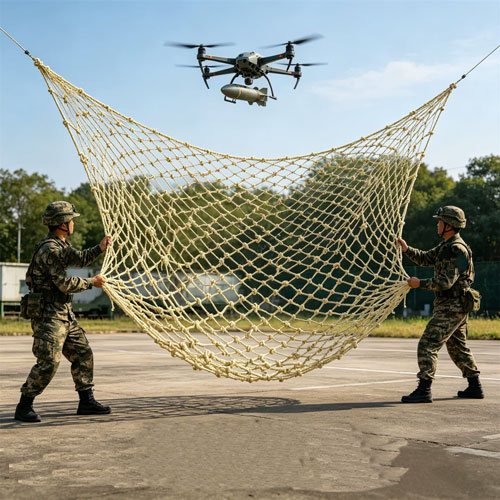
The United Kingdom has emerged as one of the most proactive markets for physical counter-drone solutions, driven by a combination of regulatory vigilance, security threats, and critical infrastructure protection requirements. As unmanned aerial vehicles (UAVs) become more accessible and sophisticated, the demand for reliable anti-drone net UK solutions has grown significantly across airports, prisons, government facilities, and private enterprises.
Unlike electronic countermeasures such as jamming or GPS spoofing — which face strict legal limitations under UK communications law — physical anti-drone netting systems offer a compliant, non-kinetic method of neutralizing drone threats. This article provides a comprehensive overview of the UK regulatory landscape for counter-drone netting, including CAA approval requirements, Home Office oversight, Ministry of Defence procurement procedures, and deployment considerations for critical national infrastructure sites.
Whether you are a security manager at a UK airport, a prison governor evaluating perimeter protection, or a procurement officer for the Ministry of Defence, understanding how regulatory frameworks affect your purchasing and deployment decisions is essential for achieving both security and regulatory compliance.
Understanding the Anti-Drone Net UK Regulatory Environment
The regulatory framework governing counter-drone netting across the UK involves multiple authorities with overlapping jurisdictions. Understanding which agency oversees your specific application is the first step toward compliance.
At the national level, the Civil Aviation Authority (CAA) regulates all airspace-related security measures, including physical barriers that could affect aviation safety. The Home Office oversees counter-drone policy for law enforcement, prisons, and domestic security applications. Meanwhile, the Ministry of Defence (MOD) manages procurement for military installations and has its own certification standards for physical security systems.
This multi-agency approach means that an anti-drone netting solution approved for a military base may not automatically satisfy CAA requirements for an airport, and vice versa. Operators must work with suppliers who understand each agency’s specific testing protocols, documentation requirements, and site inspection procedures.
CAA Approval for Anti-Drone Nets at UK Airports
The Civil Aviation Authority (CAA) is the primary regulatory body for any CAA approved anti-drone net UK installation at or near aerodromes. Under the Air Navigation Order 2016 and CAP 722 (Unmanned Aircraft System Operations in UK Airspace), any physical structure that could affect aircraft safety — including anti-drone netting systems — must undergo a formal aerodrome safety assessment.
Key CAA Requirements
- Aerodrome Safety Assessment (ASA): Any anti-drone netting installed within the aerodrome boundary or approach paths requires a documented safety case demonstrating that the netting does not create a collision hazard or obstruct visual flight rules (VFR) operations.
- Height and location restrictions: Nets must not exceed maximum height limits defined in the aerodrome’s Obstacle Limitation Surfaces (OLS) plan. Typical height restrictions range from 10 to 25 metres depending on proximity to runways.
- Marking and lighting: If the netting structure exceeds 15 metres in height or is located near approach paths, CAA may require aviation warning markings or low-intensity obstruction lighting under CAP 168 (Licensing of Aerodromes).
- Material specifications: The netting material must be non-reflective to avoid radar interference and must not produce loose fragments under high wind conditions that could ingress into engines or control surfaces.
CAA Approval Process
The approval process typically takes 8–16 weeks and requires submission of structural engineering certifications, wind-loading analysis, material testing reports, and an environmental impact assessment. Many anti-drone netting suppliers offer pre-certified systems with CAA approved anti-drone net UK status, significantly streamlining the approval timeline.
For UK airports and seaports operating under an Aerodrome License, the CAA also requires an annual inspection of all physical security structures, including anti-drone netting. Failing to maintain CAA compliance can result in enforcement action including fines and suspension of the aerodrome license.
Home Office Counter Drone Netting Regulations
The Home Office is the lead government department for domestic counter-drone security, including the regulation of Home Office counter drone netting UK deployments at prisons, critical national infrastructure, and public events. The Home Office Counter-Unmanned Aircraft Systems (C-UAS) Strategy, published in 2022, establishes the national framework for physical and electronic countermeasures.
Home Office Regulatory Framework
- Protection of Freedoms Act 2012: Governs the use of security measures that may interfere with civil liberties. Anti-drone netting systems installed in public-accessible areas must balance security requirements with public access rights.
- Police, Crime, Sentencing and Courts Act 2022: Provides new powers for prison authorities and police forces to deploy physical counter-drone measures, including netting systems, around custodial facilities and restricted zones.
- National Protective Security Authority (NPSA) Guidelines: The NPSA (formerly CPNI) publishes technical specifications for physical security systems protecting CNI sites, including recommended mesh sizes, tensile strength ratings, and installation methodologies for counter-drone netting deployments.
Home Office Approval Process
For applications under Home Office jurisdiction, suppliers must demonstrate compliance with NPSA Security Standards (formerly CPNI standards). The process involves a site-specific risk assessment, structural integrity certification, and proof that the netting system does not interfere with other security infrastructure such as CCTV, radar systems, or communications equipment.
The Home Office maintains a list of pre-approved counter-drone suppliers through the C-UAS procurement framework. Organisations seeking Home Office counter drone netting UK solutions are strongly advised to select suppliers already listed on this framework, as it significantly reduces the procurement timeline and ensures regulatory compliance.
Critical National Infrastructure and Anti-Drone Net UK Deployment
The UK Centre for the Protection of National Infrastructure (CPNI), now part of the National Protective Security Authority (NPSA), classifies several categories of sites that require enhanced physical security against drone threats. Deploying physical counter-drone netting across these sites requires careful coordination with multiple regulatory bodies and adherence to sector-specific security standards. The anti-drone net for UK critical national infrastructure category encompasses a wide range of facilities from energy generation to telecommunications.
Critical National Infrastructure (CNI) sites identified as requiring counter-drone netting protection include nuclear facilities, power stations, water treatment plants, telecommunications hubs, government data centres, and transport hubs. The anti-drone net for UK critical national infrastructure market has grown substantially following several high-profile drone incursions at UK nuclear sites and energy facilities between 2018 and 2024.
NPSA guidance recommends a layered physical security approach, with anti-drone netting serving as the outermost physical barrier in a comprehensive C-UAS strategy that also includes drone detection radar, RF scanners, and incident response protocols. The mesh specification for CNI applications typically requires higher tensile strength and weather resistance than standard commercial installations.
Anti-Drone Net Requirements for UK Airports and Seaports
UK airports and seaports represent some of the most complex environments for anti-drone net for UK airports and seaports deployment, due to the combination of regulatory oversight from the CAA, maritime authorities, and the Department for Transport.
Airport-Specific Requirements
- Perimeter coverage: Anti-drone netting at UK airports must typically cover the entire airside perimeter, including runways, taxiways, aprons, and fuel storage areas. Height requirements vary from 8 metres for perimeter fencing to 20+ metres for critical approach-path protection.
- Integration with existing security: Netting systems must integrate with airport CCTV, radar, and access control systems without causing interference. The anti-drone net for UK airports and seaports installations must also accommodate vehicle access gates, emergency exits, and wildlife management protocols.
- Wind load compliance: UK airport installations must withstand wind loads of up to 50 m/s (180 km/h) as specified in BS EN 1991-1-4 (Eurocode 1), with regular structural inspections mandated by the CAA.
Seaport-Specific Requirements
UK seaports face additional challenges due to saltwater corrosion, wind exposure, and the need to protect both cargo areas and passenger terminals. The Maritime and Coastguard Agency (MCA) may impose additional requirements for anti-drone netting at seaports, particularly those handling hazardous cargoes.
Key considerations for anti-drone net for UK airports and seaports installations include:
- Corrosion-resistant materials (marine-grade stainless steel or HDPE with UV stabilisers)
- Modular designs that allow rapid deployment and reconfiguration for changing port layouts
- Compliance with the Port Facility Security Regulations 2004 and the International Ship and Port Facility Security (ISPS) Code
Anti-Drone Nets for UK Prisons and Correctional Facilities
UK prisons and correctional facilities have become a primary market for anti-drone netting systems, driven by the increasing use of drones to smuggle contraband including mobile phones, drugs, and weapons into custodial facilities. The Ministry of Justice (MoJ) and HM Prison and Probation Service (HMPPS) have mandated counter-drone measures across the UK prison estate, with particular emphasis on the anti-drone net for UK prisons and correctional facilities as a proven physical deterrent.
The anti-drone net for UK prisons and correctional facilities market is governed by HMPPS Security Group standards, which specify minimum performance requirements for physical drone countermeasures. These standards are informed by the Police, Crime, Sentencing and Courts Act 2022, which explicitly authorises prison governors to deploy physical counter-drone systems.
Key Requirements for Prison Installations
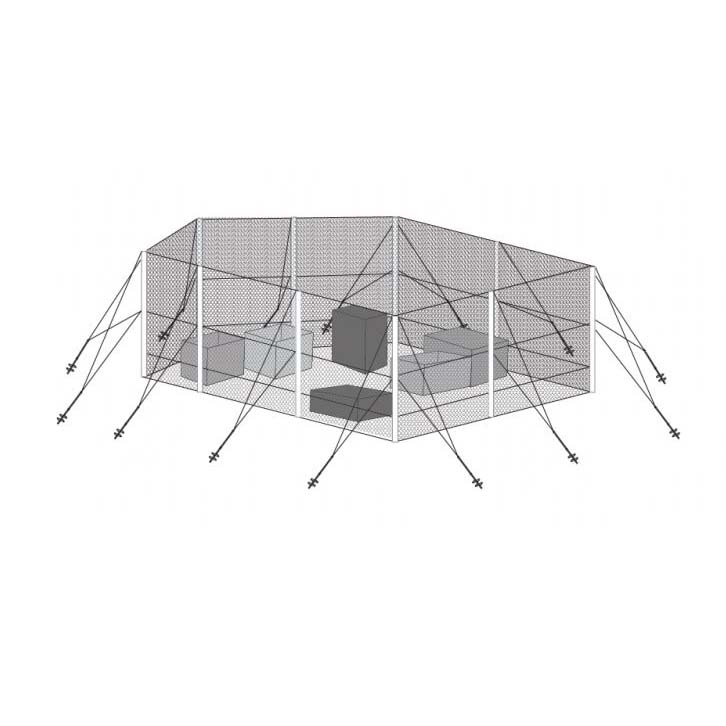
- Full perimeter enclosure: Anti-drone netting at UK prisons typically requires complete overhead coverage of exercise yards, landing areas, and peripheral zones. Nets must be tensioned to prevent sagging that could create climbing hazards.
- Mesh size specifications: HMPPS standards typically require mesh apertures no larger than 50 mm × 50 mm to prevent drones and small packages from passing through the netting.
- Anti-climb integration: Netting support structures must be designed to prevent inmates from using them as climbing aids, with smooth pole surfaces and no horizontal cross-members below 3 metres.
- Fire safety compliance: Netting materials must meet BS 476 (Fire Tests on Building Materials and Structures) standards, ensuring they do not propagate flame in the event of a fire.
Several UK prison estates have already completed large-scale anti-drone netting installation programmes, including HMP Manchester, HMP Birmingham, and HMP Wandsworth. The Home Office has allocated significant funding through the Prison Estate Transformation Programme to accelerate counter-drone netting deployment across Category A, B, and C facilities.
UK Ministry of Defence Anti-Drone Net Procurement
The UK Ministry of Defence anti-drone net procurement process follows the Defence Security and Assurance Services (DSAS) framework, with additional oversight from the Defence Intelligence Staff (DIS) for sensitive installations. MOD procurement for physical counter-drone systems has accelerated following the 2023 Defence Command Paper, which identified drone threats as a priority capability gap.
MOD Procurement Routes
- Defence C-UAS Framework: The MOD maintains a dedicated Counter-Unmanned Aircraft Systems procurement framework, typically refreshed every 3–4 years. Suppliers seeking UK Ministry of Defence anti-drone net procurement opportunities must register on this framework and pass a pre-qualification assessment covering financial stability, technical capability, and security clearance.
- JSP 440 (The Defence Manual of Security): All physical security equipment procured by the MOD must comply with Joint Service Publication 440, which defines physical security standards for defence establishments. Anti-drone netting systems must meet JSP 440 Category A or B standards depending on the threat level of the installation.
- NATO STANAG compatibility: For joint operations and NATO bases on UK soil, MOD-procured anti-drone netting systems must be compatible with NATO Standardization Agreements (STANAGs) relating to physical security and force protection.
Procurement Process Timeline
A typical UK Ministry of Defence anti-drone net procurement cycle spans 12–18 months from initial tender to installation. The process includes:
- Requirements Definition (2–3 months): Site survey, threat assessment, and specification development by DSAS security advisors.
- Tender Publication (1 month): Open or restricted tender via the Defence Sourcing Portal (DSP).
- Evaluation (3–4 months): Technical evaluation, cost benchmarking, and site demonstration at an MOD testing facility.
- Security Vetting (2–3 months): Supplier personnel undergo SC (Security Check) or DV (Developed Vetting) clearance as required.
- Installation and Commissioning (3–6 months): On-site installation, integration with existing security systems, and final acceptance testing.
Suppliers experienced with the MOD counter-drone procurement process understand that security clearance requirements are often the most significant bottleneck. Pre-vetted engineering teams with existing SC clearance can reduce overall project timelines by 8–12 weeks.
Post-Brexit Trade Regulations Affecting Anti-Drone Net UK Imports
Since the United Kingdom’s departure from the European Union, post-Brexit anti-drone net trade regulations UK have created new import requirements that affect suppliers and buyers of physical counter-drone systems. Understanding these changes is essential for UK organisations sourcing anti-drone netting from European or global manufacturers.
UKCA Marking Requirements
As of 1 January 2025, all physical security products placed on the UK market — including anti-drone netting systems — must bear the UKCA (UK Conformity Assessed) marking instead of the CE marking. This affects post-Brexit anti-drone net trade regulations UK in several ways:
- Manufacturer responsibility: The manufacturer or their UK-based authorised representative must prepare a UK Declaration of Performance (DoP) and affix the UKCA mark before products can be sold or installed in Great Britain.
- Testing and certification: Products must be tested against UK-designated standards (BS standards) by a UK-approved testing body. European test reports (EN standards) may not be accepted without supplementary UK certification.
- Transitional arrangements: Products that were CE-marked before 1 January 2025 may continue to be sold with CE marking until stock is depleted, but new imports require full UKCA compliance.
Customs and Tariff Implications
The post-Brexit anti-drone net trade regulations UK also affect customs procedures for imported anti-drone netting materials:
- Tariff classification: Anti-drone netting typically falls under HS Code 7314 (Cloth, grill, netting and fencing, of iron or steel wire) or HS Code 5608 (Knotted netting of twine, cordage or rope). Duties range from 0% to 8% depending on the material composition and country of origin.
- Rules of origin: To qualify for zero-tariff access under the UK’s trade agreements, netting materials must meet specific rules of origin requirements. Materials manufactured in the EU may qualify for zero tariffs under the UK-EU Trade and Cooperation Agreement (TCA), provided they meet the product-specific rules.
- Import documentation: Importers must provide a customs declaration, commercial invoice, packing list, and — for goods originating under trade preference — a statement of origin or GSP Form A.
Supply Chain Considerations
UK buyers should verify that their anti-drone net suppliers have established post-Brexit supply chains with UKCA-compliant products. Suppliers based in EU member states may need to appoint a UK-based authorised representative to manage compliance documentation. Working with UK-based manufacturers or distributors who hold stock within the country avoids many of the customs delays and compliance uncertainties associated with direct importation.
Selecting the Right Anti-Drone Net UK Solution
Choosing the right anti-drone net UK solution requires evaluating multiple factors beyond simple product specifications. The UK regulatory environment, site-specific requirements, and long-term maintenance considerations all play a critical role in the selection process.
Key Selection Criteria
| Factor | Considerations for UK Sites |
|---|---|
| Material | Stainless steel, aramid fibre, and HDPE each offer different strength-to-weight ratios. For UK coastal sites (seaports, offshore installations), marine-grade 316 stainless steel is recommended. For prisons, aramid fibre nets provide the best combination of strength and fire resistance. |
| Regulatory Compliance | Verify that the solution carries UKCA certification and has been tested against BS standards. Suppliers should provide CAA compliance documentation for airport installations and NPSA compliance evidence for CNI sites. |
| Installation Complexity | Consider whether the site requires temporary or permanent installation. UK prisons often require permanent overhead structures, while airports may prefer modular systems that can be reconfigured as perimeter layouts change. |
| Maintenance Requirements | UK weather conditions (high humidity, wind, rain) accelerate wear on netting systems. Suppliers should offer maintenance packages that include quarterly inspections, tension adjustments, and material replacement programmes. |
| Supplier Vetting | For MOD and CNI projects, suppliers must undergo security clearance vetting. Establish whether the supplier has existing SC-cleared engineering teams and experience with UK government procurement processes. |
Cost Considerations
The total cost of an anti-drone netting installation in the UK varies significantly based on site size, material choice, and regulatory compliance requirements. Typical costs for UK installations range from £80–£200 per square metre for standard HDPE nets to £250–£500 per square metre for military-grade aramid fibre systems. These costs include structural support systems, tensioning hardware, and installation labour but exclude site preparation, groundworks, and ongoing maintenance.
Many UK organisations can access government funding for counter-drone security measures. The Home Office C-UAS fund, the Prison Estate Transformation Programme, and the Department for Transport aviation security grants all provide financial support for qualifying counter-drone netting installations.
Conclusion
The UK market for anti-drone net UK solutions is mature, well-regulated, and supported by clear frameworks from the CAA, Home Office, Ministry of Defence, and NPSA. Organisations seeking to deploy physical counter-drone netting have access to established procurement pathways, clearly defined technical standards, and a growing ecosystem of approved suppliers.
Key takeaways for UK buyers include:
- Regulatory clarity: The multi-agency regulatory environment — CAA for aviation, Home Office for domestic security, MOD for defence — provides clear guidance on compliance requirements for each application.
- Proven deployment: Anti-drone netting has been successfully deployed across UK airports, prisons, military bases, and critical infrastructure sites, demonstrating its effectiveness as a physical countermeasure.
- Post-Brexit readiness: UKCA marking and updated customs procedures are now established, and reputable suppliers have adapted their supply chains to ensure compliant product availability.
- Investment and support: Government funding programmes and established procurement frameworks make it feasible for UK organisations of all sizes to implement professional-grade anti-drone netting protection.
When evaluating anti-drone netting suppliers, prioritise those with verifiable UKCA certification, documented CAA or NPSA compliance evidence, and a track record of successful UK installations. The right supplier will not only provide a high-quality physical product but also guide you through the regulatory approval process specific to your site and application.
For expert guidance on selecting and deploying a compliant anti-drone netting system for your UK facility — whether airport, prison, military base, or critical infrastructure site — contact our team for a detailed site assessment and regulatory compliance consultation.