Introduction
Unmanned aerial vehicles (UAVs) have transformed modern warfare, offering adversaries affordable and effective surveillance, reconnaissance, and even attack capabilities. As drone threats become more sophisticated on the battlefield, military forces worldwide are seeking reliable countermeasures. Among the most trusted solutions is the military anti-drone net — a physical interception system designed to capture, entangle, and neutralize hostile UAVs without electronic emissions or signal interference. The category of Anti-Drone Nets For Military & Defence has expanded rapidly to address these evolving threats.
Unlike electronic warfare systems that jam frequencies or spoof GPS signals, a military anti drone net system provides a kinetic, impact-based defense that works against any type of drone, including those operating autonomously or on pre-programmed flight paths. The concept of military anti drone netting extends beyond simple mesh barriers — it encompasses integrated deployment platforms, radar-guided launchers, and tactical field kits designed for rapid installation. These systems are deployed across forward operating bases, convoy routes, troop encampments, and vehicle-mounted platforms — offering versatile protection in the most demanding environments.
This comprehensive guide explores how military anti-drone nets work, what materials make them effective, their various deployment scenarios, and how they compare with electronic countermeasures. Whether you are evaluating military drone defense options for base security or assessing anti-drone net for US military bases and border patrol applications, this article covers everything you need to know about physical drone interception for military use.
What Is a Military Anti-Drone Net?
A military anti-drone net is a physical barrier system engineered to intercept, capture, and disable unauthorized UAVs that enter protected airspace. Unlike traditional nets used for catching sporting drones, military-grade systems are built from high-strength ballistic materials capable of withstanding the impact velocity of fast-moving tactical drones while maintaining structural integrity during entanglement.
How Military Anti-Drone Nets Work
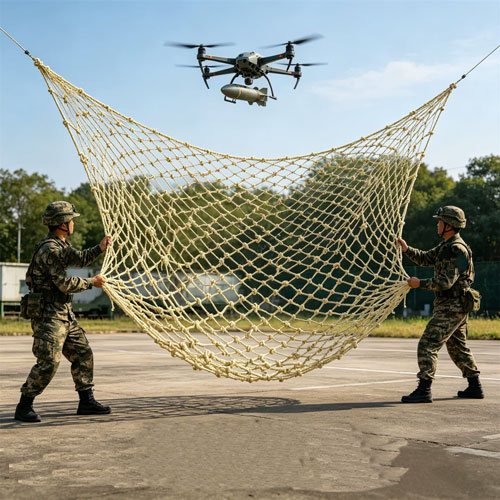
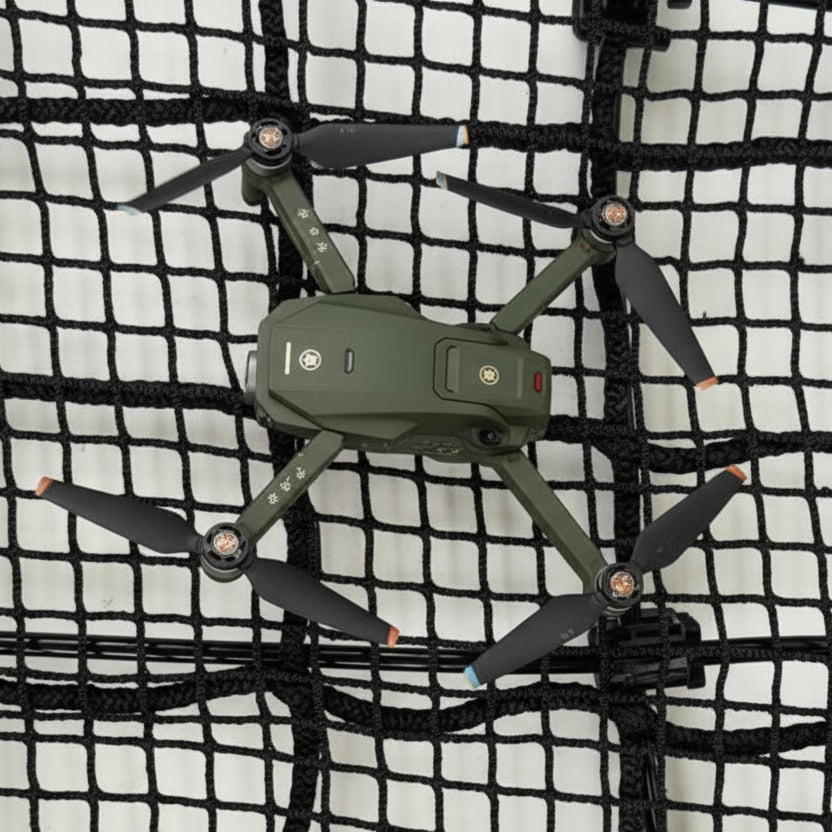
The operating principle of a military anti-drone netting system is straightforward yet highly effective. When a drone approaches a protected area, the net is deployed — either launched vertically from a ground-based platform, suspended from poles or structures, or fired from a shoulder-mounted launcher. The net opens mid-air to create a wide capture surface, and the drones forward momentum carries it into the mesh, where it becomes entangled in the flexible yet strong fibers.
Once entangled, the drones rotors are immediately fouled by the netting material, causing it to lose lift and either drop safely within the capture area or remain suspended in the net. This physical interception method offers several tactical advantages:
- No electronic signature — unlike jammers, the net emits no RF energy that could be detected or traced
- Works on autonomous drones — even UAVs flying on pre-programmed GPS waypoints with no communication link are captured
- Captures drones intact — forensic examination of captured UAVs provides valuable intelligence on enemy capabilities
- No collateral damage — prevents drone crash debris from falling on sensitive areas or personnel
Modern military anti-drone net systems integrate with radar detection and targeting systems for automated deployment. When the radar identifies a threatening UAV track, the net launcher automatically calculates the interception trajectory and fires at the optimal moment, achieving high capture rates against small and micro-drones alike.
Materials and Construction of Military-Grade Anti-Drone Nets
The effectiveness of any military anti-drone net depends fundamentally on the materials from which it is constructed. Military-grade nets must balance weight, strength, durability, and flexibility to perform reliably in combat conditions. Three primary material categories dominate the market.
Aramid Fiber for Maximum Ballistic Protection
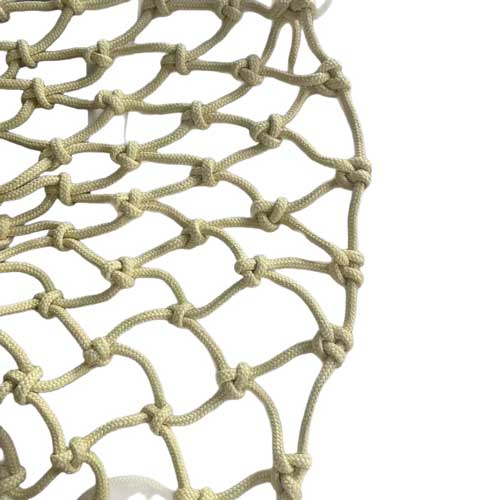
Aramid anti-drone net for military use represents the gold standard in physical drone interception. Aramid fibers — the same family of synthetic materials used in ballistic body armor and vehicle armor — offer exceptional tensile strength-to-weight ratios. An aramid anti-drone net for military use can stop drones traveling at speeds exceeding 100 km/h while weighing a fraction of equivalent steel mesh.
Key properties of aramid-based military anti-drone netting include:
- Tensile strength exceeding 3,000 MPa per fiber strand
- Flame-resistant and self-extinguishing properties
- Excellent cut and abrasion resistance for repeated deployment
- Lightweight design enabling portable field deployment
- UV-stabilized variants for extended outdoor exposure
High-Tensile Polyethylene and Hybrid Materials
High tensile strength anti drone netting for military applications also utilizes ultra-high-molecular-weight polyethylene (UHMWPE). These fibers, marketed under brand names such as Dyneema and Spectra, provide even higher specific strength than aramid — meaning they are stronger per unit weight. High tensile strength anti drone netting for military systems is particularly valued for:
- Floating capability (useful for naval and amphibious deployments)
- Near-zero moisture absorption, maintaining performance in wet conditions
- High energy absorption for stopping heavy tactical drones
- Flexibility at low temperatures without becoming brittle
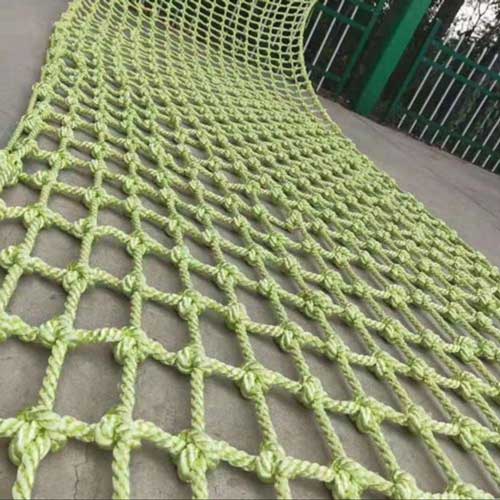
Many modern systems combine multiple materials in a hybrid weave — layering aramid for cut resistance with UHMWPE for strength and stainless steel wire for structural rigidity. The mesh aperture (hole size) typically ranges from 40 mm to 100 mm, optimized to catch common military drone sizes while minimizing wind resistance and weight.
Military Deployment Scenarios for Anti-Drone Nets
The battlefield presents diverse threats requiring flexible countermeasure deployment. Military anti-drone net systems are designed for rapid configuration across multiple operational scenarios, each demanding specific setup approaches and tactical integration.
Forward Operating Base (FOB) Protection
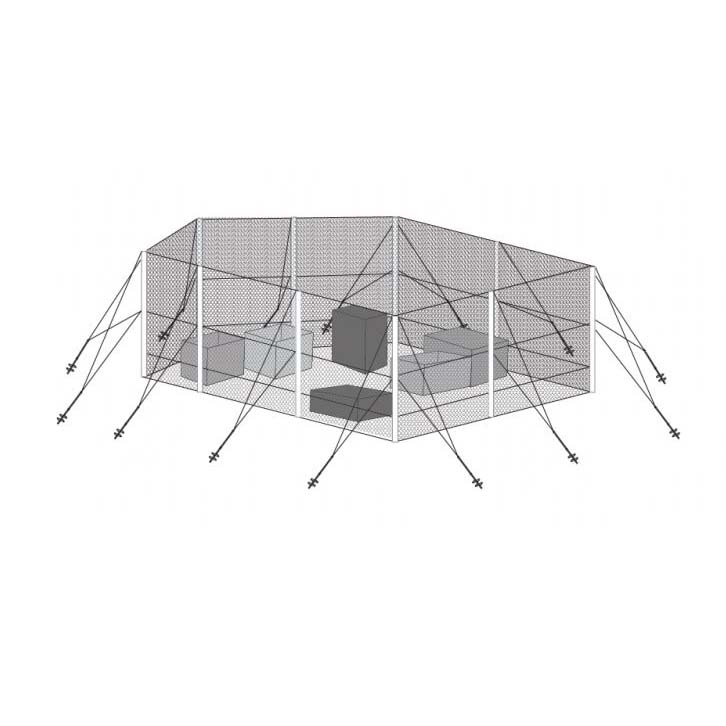
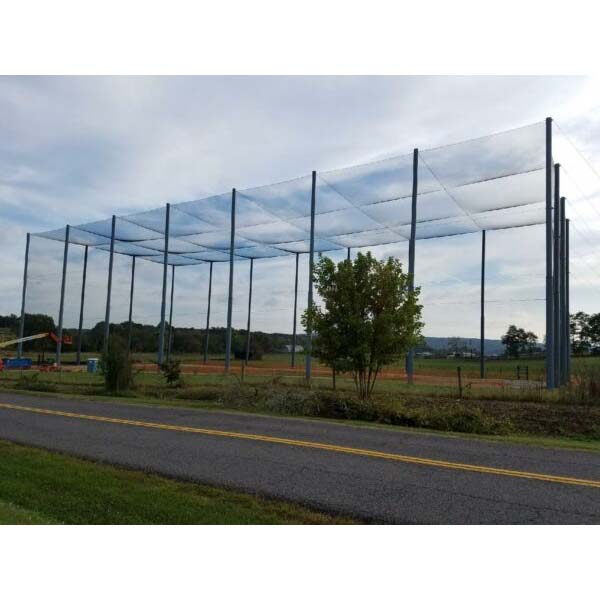
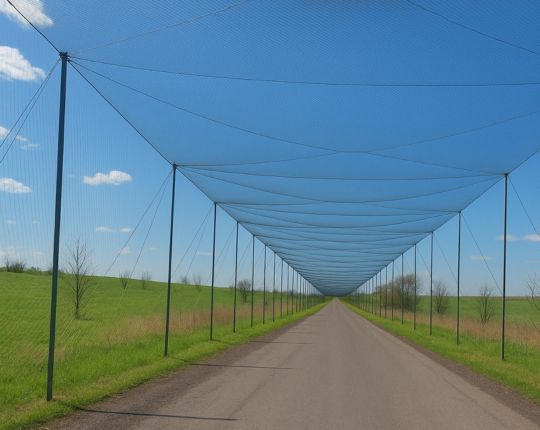
A military anti-drone net for forward operating base protection is typically configured as a perimeter defense system encircling the base perimeter. Poles are erected at intervals of 10—20 meters, supporting nets that rise to heights of 15—25 meters. This creates a continuous vertical barrier that prevents drone incursions from any direction. FOB installations often incorporate anti drone fence for military base designs with quick-deploy coupling systems that allow sections to be erected in under 30 minutes per 100-meter segment.
Perimeter Base Security
Military anti-drone net for perimeter base security addresses the unique challenge of protecting large-area installations such as logistics hubs, command centers, and airfields. These installations use modular net panels that connect to existing perimeter fencing, raising the total barrier height to counter low-flying drone approaches. For permanent bases, anti-drone net for US military bases and border patrol installations increasingly specify stainless steel mesh hybrids that provide multi-year service life with minimal maintenance, even in harsh desert or coastal environments.
Convoy Protection
Military anti-drone net for convoy protection requires mobile systems that can deploy and retract while on the move. Convoy protection nets are mounted on vehicle racks that extend upward and outward to create a defensive canopy over supply trucks, troop transports, and command vehicles. When a drone threat is detected, the military anti-drone net for convoy protection deploys in under 10 seconds, creating a protective umbrella over the vehicle column. After passing through the threat zone, the net retracts for continued transit. This form of mobile military anti drone netting is becoming standard equipment for logistics units operating in drone-threat environments.
Troop Encampment Defense
Military anti-drone net for troop encampment defense focuses on temporary positions that may be occupied for just 24—72 hours. Lightweight aramid nets weighing under 2 kg per square meter can be transported in standard equipment packs and erected by two soldiers in under 15 minutes. These systems provide overhead protection for command posts, medical stations, and rest areas, ensuring that troops vulnerable to drone-dropped munitions or surveillance are fully covered. The military anti-drone net for troop encampment defense is specifically designed for rapid setup and teardown under field conditions.
Vehicle-Mounted Systems
A vehicle mounted military anti-drone net system represents the most rapidly deployable configuration. Armored vehicles, including main battle tanks, can be fitted with net deployment modules that cover the vehicle from overhead attack. The concept of a military anti drone net on tank has gained traction as loitering munitions and FPV drones have become primary threats to armored formations. These systems use spring-loaded or gas-actuated deployment mechanisms that create a protective dome around the vehicle in under 5 seconds when sensors detect an incoming drone. The vehicle mounted military anti-drone net system integrates with the vehicles existing threat warning sensors for automatic activation.
Military Anti-Drone Net vs Electronic Jamming Systems
A common question in defense procurement is whether military anti-drone net systems or electronic jamming systems provide better protection. The answer depends heavily on the operational context, threat profile, and mission requirements. Here is a direct comparison:
| Factor | Military Anti-Drone Net | Electronic Jamming System |
|---|---|---|
| Effect on autonomous drones | ✅ Captures all drones regardless of control mode | ❌ Ineffective against GPS-waypoint autonomous drones |
| Electronic signature | ✅ Zero RF emission — stealthy operation | ⚠️ Emits detectable signals — reveals position |
| Collateral interference | ✅ None — only affects intercepted drone | ❌ May disrupt own communications, GPS, radar |
| Forensic intelligence | ✅ Drone captured intact for analysis | ❌ Drone typically crashes or flees |
| Coverage area | ⚠️ Covers defined perimeter or point | ✅ Wide-area electronic umbrella |
| Multi-drone swarm defense | ⚠️ Multiple launchers needed for swarms | ✅ Can disrupt entire swarm simultaneously |
| Weather dependence | ⚠️ Wind affects deployment accuracy | ✅ Unaffected by weather conditions |
For comprehensive military drone defense, most defense forces now adopt a layered approach combining both technologies. Electronic jamming provides wide-area early defense and swarm disruption, while military anti-drone net systems provide the final physical barrier that guarantees interception of any drone that penetrates the electronic defense layer.
In scenarios where electronic warfare is restricted — such as peacekeeping missions, operations near civilian infrastructure, or when operating in coalition environments with shared spectrum — the military anti-drone net becomes the primary countermeasure, offering effective defense without the diplomatic and operational complications of jamming.
Durability and Weather Resistance
Military operations span every climate on Earth — from the extreme heat of desert theaters to the freezing temperatures of arctic deployments and the humidity of tropical environments. Military anti-drone net systems must maintain performance across this entire range, particularly for fixed installations like military anti-drone net for perimeter base security that must operate reliably for extended periods.
Temperature Resistance
Military-grade anti-drone netting materials are engineered for thermal stability from -40°C to +80°C. Aramid fibers retain over 90% of their tensile strength at extreme temperatures, while UHMWPE maintains flexibility down to -150°C without embrittlement. The netting does not become stiff or brittle in cold weather, ensuring reliable deployment even in winter operations.
UV and Solar Degradation
Extended exposure to direct sunlight degrades many synthetic materials. Quality military anti-drone netting incorporates UV stabilizers and protective coatings that maintain structural integrity for 3—5 years of continuous outdoor deployment. For permanent base installations, stainless steel mesh hybrids offer effectively unlimited UV resistance.
Wind and Rain Performance
High winds pose the greatest environmental challenge to net-based systems. Military-grade nets are designed with aerodynamic mesh patterns that minimize wind loading while maintaining drone capture effectiveness. Systems are rated for continuous operation in winds up to 100 km/h and gust survival to 150 km/h. Heavy rain and snow do not affect net performance, though heavy ice accumulation may require de-icing procedures in extreme conditions.
Salt Spray and Corrosion
For coastal bases and naval applications, high tensile strength anti drone netting for military use is available with corrosion-resistant hardware and salt-tolerant fiber treatments. Stainless steel (AISI 304 or 316) hardware components ensure that mounting points, tensioners, and connection systems remain functional in salt spray environments. This makes these nets particularly suitable for military anti-drone net for perimeter base security in coastal and maritime installations.
Military Standards, Certifications, and Procurement
Military procurement of counter-drone systems follows strict standards and certification processes to ensure reliability, interoperability, and safety. Understanding these requirements is essential for manufacturers seeking anti-drone net US Department of Defense procurement contracts in the broader Anti-Drone Nets For Military & Defence marketplace.
Key Military Standards
Military-grade anti-drone net systems typically require certification against the following standards:
- MIL-STD-810 — Environmental engineering tests covering temperature, humidity, vibration, shock, and altitude
- MIL-STD-461 — Electromagnetic interference (EMI) and compatibility requirements (for any electronic integration)
- MIL-STD-1916 — DOD Preferred Methods for Acceptance of Product, governing quality assurance
- NATO STANAG — Standardization agreements for interoperability among allied forces
- UL 752 — Ballistic resistance rating for net materials (Level 1—8, depending on threat assessment)
DoD Procurement Pathways
The anti-drone net US Department of Defense procurement process typically follows the Joint Counter-Small Unmanned Aircraft Systems (C-sUAS) Office framework. Vendors must demonstrate their systems through the Joint Capability Technology Demonstration (JCTD) program or similar evaluation processes. Key evaluation criteria include:
- Probability of kill/capture per engagement
- System weight and transport footprint
- Setup and teardown time
- Total ownership cost over 5-year lifecycle
- Integration with existing C2 and radar systems
For anti-drone net for US military bases and border patrol applications, the Department of Homeland Security (DHS) and Customs and Border Protection (CBP) have separate evaluation frameworks that emphasize non-kinetic interception and minimal risk to personnel and bystanders.
International Certification
NATO allies and partner nations often maintain their own certification standards. The European Defence Agency (EDA) has published guidelines for C-UAS system certification, while individual nations — including the UK, Germany, Australia, and Israel — maintain national defense procurement standards that foreign vendors must satisfy. Most major defense contractors now require ISO 9001:2015 quality management certification as a baseline for supplier qualification.
Transportation, Storage, and Rapid Deployment
Rapid deployment capability is a critical requirement for military anti-drone net systems used in expeditionary operations. Military units must be able to transport, set up, and dismantle these systems quickly without specialized equipment or extensive training.
Packaging and Transport Configurations
Military anti-drone nets are supplied in various packaging configurations to match logistics requirements:
- Backpack kits — 15—20 kg per pack, containing 50 m² of aramid net with poles and stakes, suitable for two-person transport
- Pelican-case modules — 30—40 kg cases containing vehicle-mounted deployment systems with integrated launchers
- Palletized systems — 200—500 kg pallets for FOB-scale perimeter coverage, transportable by truck, helicopter sling, or cargo aircraft
- Containerized solutions — ISO shipping container-based systems with integrated radar, launchers, and command console for permanent base deployment
Storage Requirements
Proper storage is essential to maintain military anti-drone net system readiness. Aramid-based nets should be stored in sealed, climate-controlled containers when not in use to prevent moisture absorption and UV degradation. The recommended storage conditions are:
- Temperature: 5°C to 35°C
- Relative humidity: 30% to 70%
- Away from direct sunlight and ozone sources
- Off the ground on shelving or pallets
Rapid Deployment Procedures
Modern military anti-drone net systems are designed for rapid deployment timelines:
| System Type | Setup Time | Personnel Required | Coverage Area |
|---|---|---|---|
| Vehicle-mounted | Under 10 seconds | 1 (driver) | 50—100 m² per vehicle |
| Backpack (troop encampment) | 10—15 minutes | 2 soldiers | 200—500 m² |
| Perimeter (FOB scale) | 30—60 minutes | 4—6 personnel | 5,000—20,000 m² |
All deployment procedures are designed to be performed under combat conditions, with minimal noise and light signature to avoid revealing positions to enemy forces.
Cost Considerations for Military Anti-Drone Net Systems
Understanding the military anti drone net price landscape is essential for defense procurement planning. Costs vary significantly based on material specifications, system scale, and integration complexity.
Price Range by System Type
| System Configuration | Typical Price Range (USD) | Best For |
|---|---|---|
| Backpack portable net kit | $2,000 — $8,000 per kit | Troop encampment, patrol bases |
| Vehicle-mounted system | $15,000 — $45,000 per unit | Convoy protection, tank defense |
| Perimeter FOB system (100m) | $50,000 — $200,000 | Forward operating bases |
| Full base integrated system | $500,000 — $3,000,000 | Permanent military installations |
Factors Affecting Price
The military anti drone net price is influenced by several key factors:
- Material grade — Aramid and hybrid systems cost 2—4× more than standard polyethylene nets but offer superior ballistic protection
- Integration level — Systems with integrated radar detection, automated launch, and C2 connectivity command higher prices
- Durability rating — Extended-weather and UV-stabilized materials add 15—30% to material costs
- Certification status — MIL-STD certified systems carry premium pricing due to testing and documentation costs
- Training and support — Complete packages including operator training, technical manuals, and field support increase total cost
Selecting the Best Military Anti-Drone Net
When evaluating the best military anti drone net for a specific application, consider the following criteria:
- Operational environment — desert, arctic, jungle, or maritime conditions
- Threat profile — consumer micro-drones vs. military-grade tactical UAVs
- Deployment timeline — permanent installation vs. rapid expeditionary deployment
- Integration requirements — standalone operation vs. integration with existing C-UAS systems
- Lifecycle cost — initial procurement vs. 5-year total ownership including maintenance, spare parts, and replacement
For most military applications, the best military anti drone net combines aramid fiber construction for interception reliability with a modular deployment system that adapts to multiple operational scenarios. Consulting with specialized manufacturers who understand military procurement processes is strongly recommended before making a procurement decision.
Conclusion
The military anti-drone net has established itself as an indispensable component of modern layered defense against UAV threats. Unlike purely electronic countermeasures, physical interception systems provide guaranteed neutralization of any drone — regardless of its communication protocol, autonomy level, or manufacturer — making them uniquely suited for the unpredictable nature of battlefield drone threats. The entire field of Anti-Drone Nets For Military & Defence continues to evolve as new materials and deployment technologies emerge.
From military anti-drone net for forward operating base protection to vehicle mounted military anti-drone net systems for convoy defense, these versatile solutions adapt to the full spectrum of military operational requirements. The combination of advanced materials — particularly aramid fibers and UHMWPE — with modular deployment systems enables forces to establish effective drone defense in minutes rather than hours. A well-implemented military anti drone net system provides coverage across all threat vectors, while a dedicated anti drone fence for military base ensures no approach angle is left unprotected.
As drone technology continues to evolve, the importance of physical interception methods only increases. Electronic jamming and directed-energy weapons will continue to play important roles in military drone defense, but the military anti-drone net system provides the ultimate safety net — the last line of defense that guarantees no hostile drone reaches its target. The military anti drone net on tank configuration, for example, has proven particularly effective against FPV drone threats in recent conflicts.
For defense procurement officers, base security commanders, and military planners evaluating counter-UAS capabilities, investing in proven physical interception technology alongside electronic countermeasures represents the most comprehensive approach to countering the growing UAV threat across all operational domains.